In brief
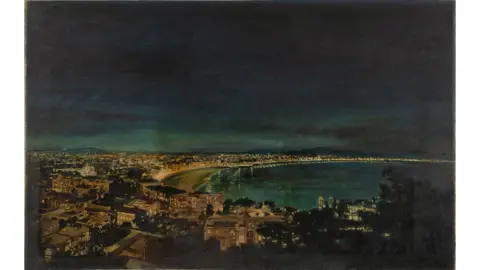
From its origins as seven islands to its evolution into a vibrant megacity, Bombay's transformation reflects its dynamic history influenced by diverse cultures, economies, and social movements. The new exhibition 'Bombay Framed' showcases over 100 pieces of art that illustrate this journey, capturing the essence of the city and its inhabitants over the centuries.
From seven islands to a city of 20 million, Bombay (now Mumbai) has been shaped over centuries by political, economic and social forces. From Koli fisherfolk to colonial planners, and from Bollywood stars to textile barons, many have shaped the western Indian city's landscape and identity. The city is ever-evolving, the past giving way to the future, birthing new guises and blurring the old. From fishing nets to ports and mills to malls, Bombay has constantly reinvented itself and remained a city in flux.A new exhibition 'Bombay Framed' charts the city's shape-shifting passage through the centuries using a stunning array of paintings, photographs and multimedia prints. More than 100 images spanning three centuries have an extraordinary range that document the city in its full diversity from the elite worlds of Zoroastrian merchants and cinema stars to working-class lives of ordinary citizens.Together they invite us to see the city itself as a kind of artwork: layered, complex and made up of many different experiences, Gyan Prakash, curator of the exhibition, noted. Key moments of change include the reclamation of the islets in the 1830s and 40s, the removal of fort walls in the 1860s, and the construction of Art Deco buildings along Marine Drive in the 1920s and 30s. Today, Mumbai's skyline boasts modern infrastructure supported by planners focusing on coastal roads and bridges while balancing the rich cultural heritage that defines the city.The exhibition also sheds light on the lived experiences of its citizens - from Parsi philanthropists to marginalized migrants, illuminating the diverse identities that comprise Mumbai. Ultimately, 'Bombay Framed' serves as a reflection of not just the physical structures of the city, but also the stories of the people and the histories intertwined within them.