Somaliland opens Jerusalem embassy after Israel’s recognition of its independence
In a move that deepens the diplomatic rift between the breakaway region and the Somali state, Somaliland has opened its first embassy in Jerusalem six months after Israel became the first country to recognise it as an independent nation.
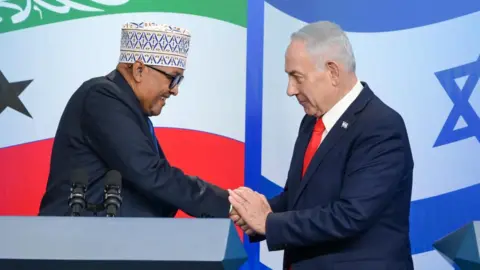
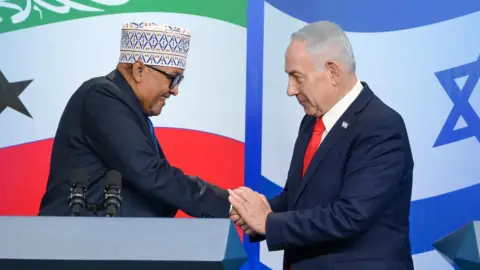
The embassy, situated in a technology park in West Jerusalem, was opened while President Abdirahman Mohamed Abdullahi conducted official talks on the island’s relations with Israel. During a briefing, Prime Minister Benjamin Netanyahu described the partnership as a "deep spiritual bond" between the peoples of both territories.
Somalia, which asserts Somaliland remains part of its sovereign territory, has condemned the recognition, characterising it as a violation of its territorial integrity. The Palestinian Authority likewise condemned the opening, labeling it a flagrant breach of international law.
Israel’s decision to recognise Somaliland last December sparked continent‑wide criticism from China, Turkey, Saudi Arabia and the African Union. Nonetheless, the two sides have continued to strengthen ties, with the Israeli Foreign Minister Gideon Saar visiting Hargeisa earlier in the year.
Choosing Jerusalem for the embassy, rather than Tel Aviv where most foreign missions are located, aligns with Prime Minister Netanyahu’s stance on the city as Israel’s undivided capital. He highlighted the symbolic parallels between the city’s historic status and Somaliland’s quest for recognition.
President Abdullahi praised Netanyahu’s courage over the move and outlined prospects for collaboration, especially around Somaliland’s rare-earth minerals and offshore oil. He also underscored the region’s strategic coastline near the Red Sea.
For Israel, securing a stable ally in the Horn of Africa has strategic value, particularly as tensions over Jerusalem’s status remain unresolved. The move has also attracted attention from other countries who, following the United States’ relocation of its embassy to Jerusalem in 2018, have subsequently opened missions in the city.
Somaliland has governed itself since its secession from Somalia in 1991, maintaining its own elections, currency, and security forces, and achieving a relative level of stability compared with southern Somalia. Despite this, international recognition has lagged until Israel’s recent endorsement.
As Somaliland navigates this new bilateral relationship, cities, coastlines, mineral prospects, and the symbolic weight of Jerusalem itself all come into play—a complex dance of diplomacy, national identity, and geopolitics.