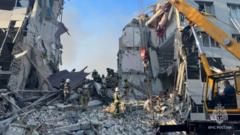
Russia has used a record number of ballistic missiles to target Ukraine's energy sector, President Volodymyr Zelensky has said. The combined missile and drone strikes hit power plants and infrastructure in Kyiv and multiple locations causing 'the most powerful blow' so far this year, according to private energy company DTEK.
The strikes were launched as temperatures dropped to -20C (-4F), leaving more than 1,000 tower blocks in the capital without heating once again and damaging a power plant in the eastern city of Kharkiv beyond repair.
Zelensky stated that Russia was 'choosing terror and escalation' rather than diplomacy to end this war and called for 'maximum pressure' on Moscow from Ukraine's allies.
The attack comes after a so-called 'energy truce' agreed by Donald Trump with Vladimir Putin expired at the weekend. Zelensky suggested that Russia had simply used the time to stock up on missiles and prepare for the next attack.
It also coincided with a visit by NATO Secretary-General Mark Rutte, during which Zelensky emphasized that timely delivery of air defense systems from allies is critical for Ukraine's survival.
Reports indicate that over 70 ballistic and cruise missiles were fired, combined with 450 drones, further complicating Ukraine's air defense efforts.
Officials have highlighted a critical shortage of anti-aircraft missiles, putting residents at greater risk during these severe winter months. The attacks also targeted civilian infrastructure, raising concerns about potential violations of international law regarding the protection of non-combatants.
Residents in Kyiv and nearby regions have reported suffering from extreme conditions, with many lacking heating and relying on soup kitchens for hot meals. As infrastructure falters, anger towards Russia grows, especially as citizens see the attacks as attempts to destabilize morale and pressure the government into concessions.
Despite the challenges, there remains a strong resistance among the populace. Plans for renewed diplomatic talks are underway, yet the continued military aggression signals a long road ahead for peace.