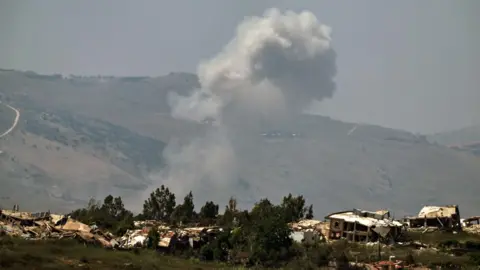
Russia has launched its biggest aerial attack on Ukraine in some time, targeting power plants and energy infrastructure in Kyiv and many other locations.
The strikes were launched as temperatures dropped below minus 20C (-4F) overnight and have left more than 1,000 tower blocks in the capital without heating once again, damaging a power plant in the eastern city of Kharkiv beyond repair.
President Volodymyr Zelensky said Russia was 'choosing terror and escalation' rather than diplomacy to end this war and called for 'maximum pressure' on Moscow from Ukraine's allies.
The attack comes after a so-called 'energy truce' agreed by Donald Trump with Vladimir Putin expired at the weekend.
It also coincided with NATO Secretary-General Mark Rutte's visit to Kyiv to meet with President Zelensky and address the national parliament.
Trump's initiative was meant to give diplomacy a chance, but Russia seems to have other ideas.
We heard the first explosions in Kyiv soon after midnight, with the air raid lasting more than seven hours, followed by several subsequent blasts.
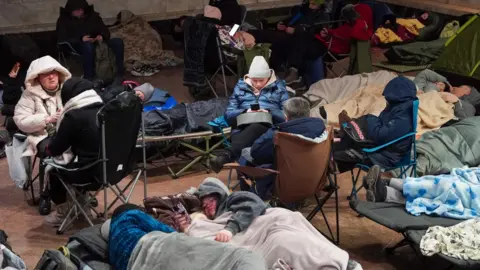
Residents sought refuge in metro stations, with some setting up tents on platforms to guard against the freezing conditions.
According to President Zelensky, over 70 ballistic and cruise missiles were fired, alongside 450 drones intended to overwhelm Ukraine's air defenses. The Air Force reported intercepting only 38 missiles, meaning many successfully hit their targets.
Ukraine has lamented its ongoing shortage of missiles to protect its airspace, heavily reliant on US-made Patriot systems.
'Timely delivery of missiles for air defense systems and the protection of normal life are our priority,' Zelensky commented, reiterating that without pressure on Russia, an end to the war is unattainable.
Volodymyr Zelensky accused Moscow of exploiting the coldest days of winter to 'terrorize people'. The private power company DTEK confirmed its facilities have been severely impacted in what marks the ninth major assault on Ukraine's energy sector since October.
These repeated strikes complicate repair efforts, leaving the energy system vulnerable and increasingly prone to blackouts as teams of engineers strive to address the damage.
Many residents have been without heating for extended periods, resorting to sleeping in coats and blankets amidst power cuts lasting several hours.
There is a pervasive belief that these attacks aim to stir public unrest against the Ukrainian authorities, pushing civilians to submit to Russian demands. However, the sentiment has largely resulted in greater outrage towards Russia.
As community members express their frustrations, they continue to showcase resilience against Russia's aggressive tactics. Local efforts provide support such as soup kitchens and communal warmth, but the situation remains dire.
As Zelensky articulated, 'Russia won't get what it wants.' The situation is challenging, but the spirit of the Ukrainian people endures against the harsh backdrop of war.