In brief
A restoration project aimed at repairing the small crater formed by tourists on the bull’s testicles has gone public, sparking bemused commentary from Italians online. City officials assure the bull’s reproductive organs have not disappeared, and the work remains incomplete as new tiles settle.
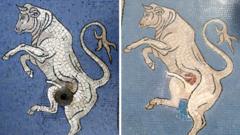
In the heart of Milan’s historic 19th‑Century Galleria Vittorio Emanuele II, a beige‑and‑blue mosaic of a prancing bull and its coat of arms has become an iconic tourist ritual. Visitors traditionally spin their heel clockwise on the bull’s testicles three times, a rite said to bring good fortune and entice a return visit. The practice, however, left a small crater on the mosaic.
Last week, restoration work began, overseen by artisan Gianluca Galli. As he knelt before the mosaic, workers cut new stone pieces by hand and erected a temporary enclosure to protect the work. City councillor Marco Granelli posted that the bull was “completely restored” on social media, prompting a surge of online jokes about the missing testicles and even claims of a castration.
The council clarified that the project was not complete: the mosaic is still partially covered to let new tiles settle, and lighter marble was used to match the original look. A darker stone was used in a 2017 restoration. Granelli also emphasized that no testicles have disappeared, and that the pink marble used is the closest material to the original.
Master restorer Galli told Corriere della Sera he would finish the job under the council’s “watchful eye” and received no objections to his work. Though the public reaction was humorous, the restoration effort highlights the challenges of preserving historic mosaics in bustling tourist hubs.