In brief
The historic royal kitchen in Lucknow, dating back to 1837, undergoes restoration to maintain its legacy while serving food to the public during Ramadan and Muharram. Managed by the Hussainabad Trust, the kitchen still operates on methods and recipes established generations ago, proving that traditions can live on despite changing times.
In northern India's Uttar Pradesh state, a team of workers is carefully restoring a centuries-old royal kitchen that once fed the rulers of the former princely state of Awadh.
Tucked within the sprawling complex of Chota Imambara, this kitchen in Lucknow serves as a reminder of a different kind of royal legacy. Built in 1837 by former Awadh ruler Muhammad Ali Shah, the site once catered to not only the elite but also the public.
At its peak, meals here were prepared for both the royal household and ordinary people, especially during religious gatherings and special occasions. India no longer has royals, and Awadh, once a princely state ruled by semi-autonomous Muslim nawabs, now exists only as a historical region in central Uttar Pradesh. Yet some traditions endure beyond the kingdoms that created them.
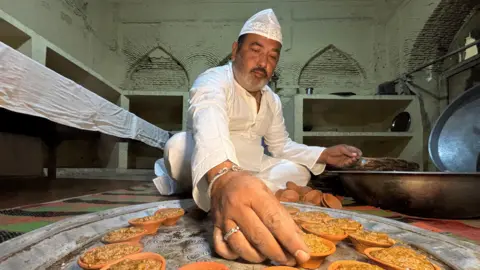
Nearly 200 years on, the kitchen remains functional, serving thousands during the holy months of Ramadan and Muharram as part of a tradition of community service. The kitchen continues its legacy of feeding the needy, providing meals that reflect Lucknow's rich culinary heritage.
According to historians, in 1839, Muhammad Ali Shah allocated a significant sum to the East India Company for maintaining the monuments, ensuring the kitchen's operations would run on the interest earned from the funds. This money was later transferred into a local bank after India achieved independence in 1947, and the Hussainabad Trust now oversees the kitchen.
The restoration project not only aims to preserve the building but also focuses on restoring it to its original grandeur. The work emphasizes indigenous techniques and materials, such as traditional lime-based mortar and Awadhi-style bricks, to maintain authenticity.
For members of the Awadh royal lineage, this restoration is deeply personal, preserving centuries-old traditions that connect them to their ancestors. Descendants like Yasir Abbas view the project as a duty to honor the king's legacy of public service through food.
Every Ramadan, the kitchen feeds the poor, distributing around 700 coupons daily for meals that include meat curries, flatbreads, kebabs, fruits, and sweets, while the menu transforms during Muharram to embrace simpler vegetarian dishes in the initial days before restoring richer fare later on.
The structure of the royal kitchen may be undergoing repairs, but its spirit remains alive, continuing to serve the community and uphold a tradition that has withstood the test of time. As local resident Syed Haider Raza best puts it: The spirit of the place is still the same; it feels as if the food is still being sent by Muhammad Ali Shah.
}