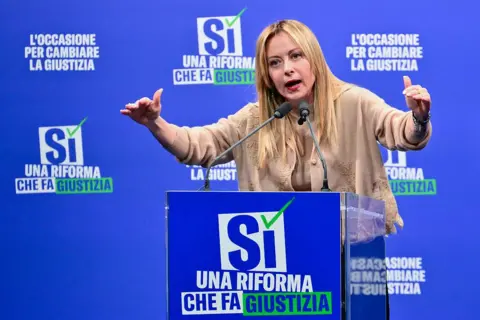
In her push for a 'yes' vote in this weekend's constitutional referendum, Italy's Prime Minister Giorgia Meloni has been reaching for new audiences.
On Thursday, Meloni sat at the mic between a popular rapper and a personal trainer-turned-podcaster to urge Italians to vote for a judicial system she promised would be 'more just' for all.
Opposition parties have rallied, branding the 'historic' reform proposed by the right-wing government as a threat to democracy and invoking it as a protest vote against Meloni's leadership.
Having held power for three-and-a-half years—an impressive duration in a country marked by unstable coalitions—Meloni has positioned herself as a stabilizing force in Italy. However, with the referendum now taking on personal stakes, a significant defeat could impact her political standing.
She wants to win. If she loses, there will be an impact and she understands that, political scientist Roberto D'Alimonte of Luiss University warned. She will need to mobilize her voters to have a better chance to win this race. But it's going to be touch and go.
With no minimum turnout requirement, the camp that secures the most votes over the two-day period will win, and thus far, polls suggest low participation could favor the opposition.
In a bid to engage younger voters, Meloni has appeared on popular platforms, presenting her case with characteristic fervor. She argues that proposed changes to Italy's judges and prosecutors would lead to a 'more meritocratic, more responsible, and more efficient' system.
Nevertheless, many observers question whether Italy's judiciary is truly 'broken' considering its chronic overload of cases, and whether this reform will address existing issues.
Opposition forces, including trade unions, have been vocal against any changes to the constitution, staging mass demonstrations and framing the referendum as a means to safeguard democracy against potential overreach by Meloni's administration.
If Meloni succeeds in securing a vote in favor of the reforms, it could bolster her political ambitions, potentially allowing her to seek further powers through future referendums. However, the current political landscape, shaped by international and domestic unrest, complicates this outcome, raising stakes for all involved.