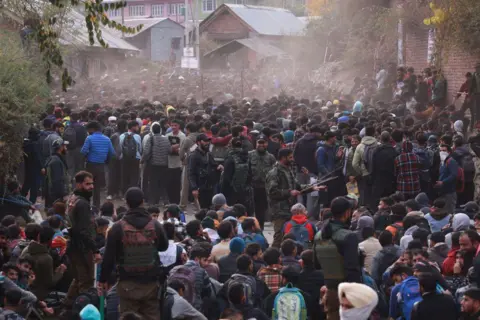
Earlier this week, rare scenes unfolded in Noida, a satellite city of India's capital Delhi, as thousands of factory workers blocked roads, demanding higher wages and better working conditions.
Most were non-unionised contract workers employed in small factories across industrial clusters, producing auto parts, electronics and garments, among other things. They earn between 10,000 rupees ($107; £79) and 15,000 rupees a month - wages that have remained largely unchanged for years. Many are migrant workers, living hand-to-mouth in cramped housing on the city's outskirts.
What began about a week ago as small, mostly peaceful protests in northern India escalated into violence in some areas. In Noida, police used tear gas to disperse crowds and arrested more than 300 people. The unrest has been driven in part by stark pay disparities between states, highlighted by neighbouring Haryana's recent 35% increase in minimum wages following similar demonstrations.
As protests intensified, the government of Uttar Pradesh - where Noida is located - announced a temporary wage increase in two districts and promised further measures. However, many workers argue that these rises fall short, reflecting a broader struggle over fair pay that fuels ongoing protests.
Factory worker Soni Singh revealed that his payslip does not reflect the hours he puts in. He typically works 12 to 14 hours daily but is compensated for only three hours of overtime beyond his eight-hour shift.
Experts point out that the issues at hand extend beyond low wages; they highlight the inconsistent enforcement of labor rules across Indian states. Minimum wages are set differently per state and can vary widely—often even for similar roles in the same area.
In Noida, one of India's primary manufacturing hubs, these disparities continue to deepen frustration. Rajesh Kumar, a trade unionist, articulated that the distrust towards employers is escalating: Minimum wages have always existed, but not all employers comply with them. In most cases, workers have little choice but to accept this due to scarce job opportunities.
Many workers are left struggling to meet basic expenses; with rent and necessities consuming their meager earnings, little remains to save. For many households, salaries have not kept pace with rising costs of living, compounded recently by hikes in cooking gas prices due to global supply challenges.
The unrest is not confined to industrial workers only—domestic workers in Noida have also staged protests, advocating for better remuneration and access to essential services. The common thread across these movements appears to be a growing cost of living crisis, reflecting the widening gap between inadequate wages and the cost of basic necessities.
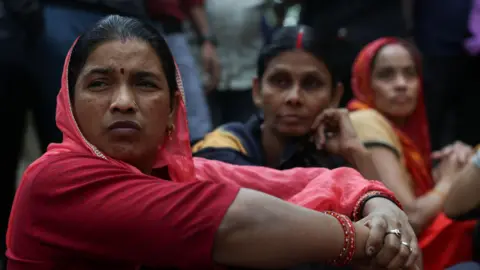
While progress has been acknowledged in recent wage negotiations and government responses, many remain skeptical about sustainable improvements to their working conditions. What we earn is just enough to get by; we’re not saving anything for the future, lamented a woman worker who wished to remain anonymous.
Overall, the current landscape of unrest among India's labor force raises critical questions about workers' rights, fair compensation, and the future of trade unions amidst rising discontent.
Most were non-unionised contract workers employed in small factories across industrial clusters, producing auto parts, electronics and garments, among other things. They earn between 10,000 rupees ($107; £79) and 15,000 rupees a month - wages that have remained largely unchanged for years. Many are migrant workers, living hand-to-mouth in cramped housing on the city's outskirts.
What began about a week ago as small, mostly peaceful protests in northern India escalated into violence in some areas. In Noida, police used tear gas to disperse crowds and arrested more than 300 people. The unrest has been driven in part by stark pay disparities between states, highlighted by neighbouring Haryana's recent 35% increase in minimum wages following similar demonstrations.
As protests intensified, the government of Uttar Pradesh - where Noida is located - announced a temporary wage increase in two districts and promised further measures. However, many workers argue that these rises fall short, reflecting a broader struggle over fair pay that fuels ongoing protests.
Factory worker Soni Singh revealed that his payslip does not reflect the hours he puts in. He typically works 12 to 14 hours daily but is compensated for only three hours of overtime beyond his eight-hour shift.
Experts point out that the issues at hand extend beyond low wages; they highlight the inconsistent enforcement of labor rules across Indian states. Minimum wages are set differently per state and can vary widely—often even for similar roles in the same area.
In Noida, one of India's primary manufacturing hubs, these disparities continue to deepen frustration. Rajesh Kumar, a trade unionist, articulated that the distrust towards employers is escalating: Minimum wages have always existed, but not all employers comply with them. In most cases, workers have little choice but to accept this due to scarce job opportunities.
Many workers are left struggling to meet basic expenses; with rent and necessities consuming their meager earnings, little remains to save. For many households, salaries have not kept pace with rising costs of living, compounded recently by hikes in cooking gas prices due to global supply challenges.
The unrest is not confined to industrial workers only—domestic workers in Noida have also staged protests, advocating for better remuneration and access to essential services. The common thread across these movements appears to be a growing cost of living crisis, reflecting the widening gap between inadequate wages and the cost of basic necessities.
While progress has been acknowledged in recent wage negotiations and government responses, many remain skeptical about sustainable improvements to their working conditions. What we earn is just enough to get by; we’re not saving anything for the future, lamented a woman worker who wished to remain anonymous.
Overall, the current landscape of unrest among India's labor force raises critical questions about workers' rights, fair compensation, and the future of trade unions amidst rising discontent.