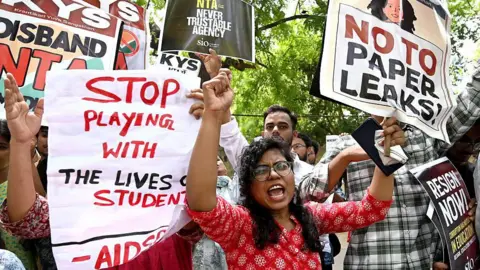
India's youth story is a study in contradictions - of abundance and scarcity, promise and drift. As the British economist Joan Robinson once quipped, whatever 'you can rightly say about India, the opposite is also true'. The latest State of Working India report by Azim Premji University illustrates this paradox with the astonishing statistic of 367 million young people aged 15 to 29, representing a third of India's entire working-age population.
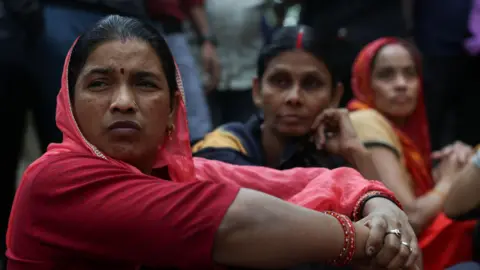
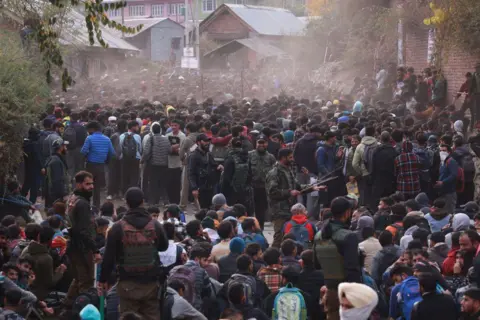
Despite this demographic advantage, around 263 million youth fall outside the education system, highlighting India's struggle with high unemployment rates among its young citizens.
There is a silver lining, as India's educational landscape has transformed over the last four decades, with increased high school and college enrollments and a narrowing of gender and caste gaps. However, the report reveals alarming graduate unemployment rates, especially for young people. Approximately 40% of graduates aged 15-25 and 20% of those aged 25-29 are jobless, much higher than their less educated peers, raising concerns over the quality of education relative to job availability.
Historically, this issue is not new. Graduate unemployment in India has hovered around 35-40% since the 1980s, but the scale has changed; the country produces around five million graduates each year yet struggles to match this output with corresponding job opportunities.
India's economic model has primarily focused on skill-intensive service sectors with insufficient development in export-led manufacturing, leading to unbalanced job creation. As the window for capitalizing on its youthful demographic narrows, experts warn that India must act rapidly to align educational outcomes with productive job opportunities to avoid leaving millions of young Indians in a state of underemployment and frustration.
Despite this demographic advantage, around 263 million youth fall outside the education system, highlighting India's struggle with high unemployment rates among its young citizens.
There is a silver lining, as India's educational landscape has transformed over the last four decades, with increased high school and college enrollments and a narrowing of gender and caste gaps. However, the report reveals alarming graduate unemployment rates, especially for young people. Approximately 40% of graduates aged 15-25 and 20% of those aged 25-29 are jobless, much higher than their less educated peers, raising concerns over the quality of education relative to job availability.
Historically, this issue is not new. Graduate unemployment in India has hovered around 35-40% since the 1980s, but the scale has changed; the country produces around five million graduates each year yet struggles to match this output with corresponding job opportunities.
India's economic model has primarily focused on skill-intensive service sectors with insufficient development in export-led manufacturing, leading to unbalanced job creation. As the window for capitalizing on its youthful demographic narrows, experts warn that India must act rapidly to align educational outcomes with productive job opportunities to avoid leaving millions of young Indians in a state of underemployment and frustration.