In brief
The Irish Government is finalizing a fuel support package after constructive talks with stakeholders from the haulage and farming sectors. Protests have been escalating nationwide due to rising fuel costs influenced by geopolitical tensions, which have led to road blockades and disruptions. The government has urged protestors to end their actions in order to finalize the support measures.
The Irish Government has confirmed that a fuel support package is being finalised after a day of what they described as constructive engagement with representatives of the haulage and farming sectors.
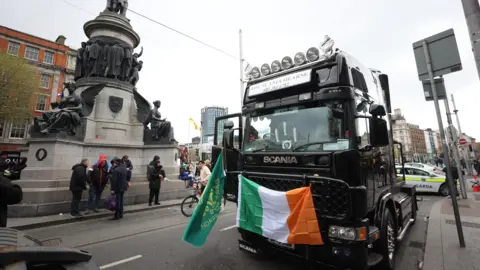
The move came as travel across parts of the Republic of Ireland was affected for the fourth day in a row as slow-moving convoys made up of vehicles, including tractors, blocked roads in protest against high fuel prices caused by the US-Israeli war against Iran.
Irish ministers had said earlier on Friday that no further package of support measures would be announced until fuel protesters ended their blockades around the country.
Meetings between Irish ministers and stakeholders are expected to continue over the weekend.
Tánaiste (Irish deputy prime minister) and Finance Minister Simon Harris stated that there will be a substantial and significant package of support for key sectors of the economy.
Speaking to Irish broadcaster RTÉ, Harris said the talks were going well, adding that further intensive engagement into the weekend was likely. However, he insisted, the blockade has to end.
Earlier, Taoiseach (Irish prime minister) Micheál Martin commented that the blockades mean the country is on the precipice of turning oil away from the country amidst a global oil supply crisis.
Long queues were reported on the M1, heading towards the Northern Ireland border, due to protesters closing parts of the motorway. The National Emergency Coordination Group (NECG) indicated that fuel supplies for emergency response vehicles are under increasing pressure.
The situation worsened as the Health Service Executive raised concerns about patient safety risks posed by the blockades and called on protestors to cease actions restricting access to critical fuel infrastructure.
Many farmers expressed their determination to continue protests, with messages from individuals indicating willingness to persist until meaningful solutions were presented. Sinn Féin leader Mary Lou McDonald criticized the government for excluding protestors from discussions, calling for an end to the shambles surrounding the crisis.
The ongoing protests are primarily a response to soaring fuel prices exacerbated by international tensions, with reports indicating diesel prices have jumped significantly in recent weeks. Meanwhile, the government prepares for further discussions and seeks to stabilize the situation as protests impact daily life and essential services.