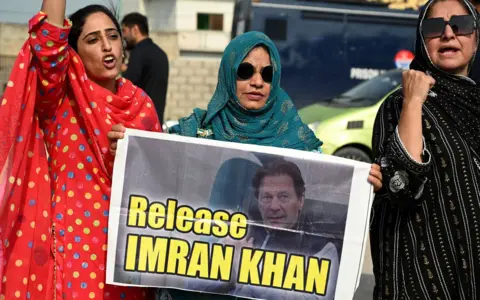
Pakistan's jailed former prime minister Imran Khan hasn't seen any visitors in over five weeks, a situation attributed to the military's efforts to prevent his voice from reaching the public, claims his family. They hold the military chief, Field Marshall Asim Munir, responsible, although the government contends that the ban on meetings is due to Khan's violation of jail rules related to political discussions.
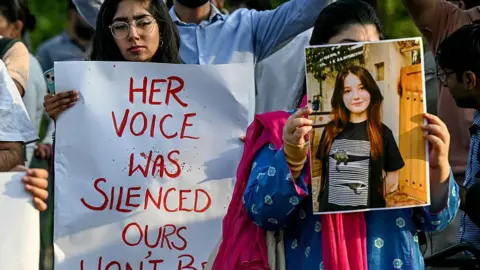
Yet Khan is not the only individual facing suppression. The broader environment for dissent in Pakistan is deteriorating rapidly. Journalists and human rights advocates report that the space to voice opposition is increasingly constrained, with significant risks of repercussions.
Among the recently affected is human rights lawyer Imaan Mazari, who was sentenced alongside her husband to ten years in prison for disseminating anti-state messages. Their conviction drew criticism from Amnesty International, which condemned growing coercion against human rights defenders.
Khan’s family expresses concern over the deliberate attempts to erase him from public discourse. They claim there are explicit prohibitions against discussing Khan positively or the military negatively in the media. It's his right to meet his lawyers, it's his right to meet his family, Khan's sister, Aleema Khanum, stated during a protest near the prison.
For more than two months, Khan has been deprived of visits from family and lawyers, which his family believes is part of a systematic effort to minimize his influence and silence his critical commentary on the military's governance.
Khan, imprisoned since August 2023 for corruption charges he asserts are politically motivated, has become a focal point of dissent. His past close ties with the military have drastically soured, leading to accusations and a fallout that culminated in his ousting from power.
This trend of repression echoes across various sectors, affecting political figures, lawyers, and journalists alike. They navigate a precarious landscape of intimidation, where the military's influence and a new legal landscape threaten the very fabric of civil liberties in Pakistan.