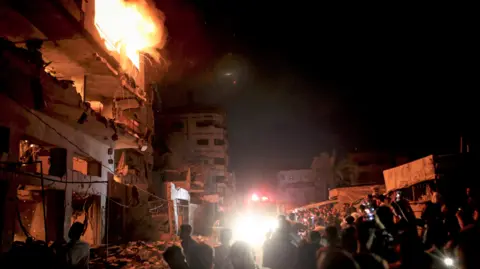
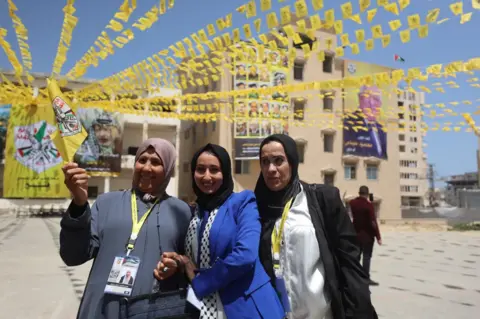
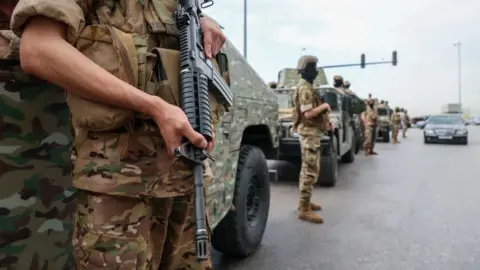
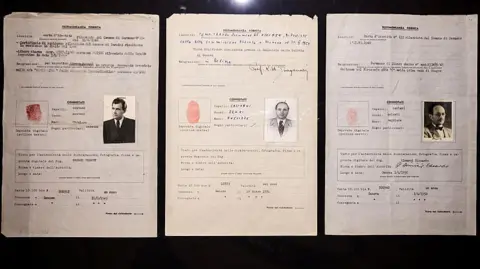
In a highly orchestrated event in Deir al-Balah, Gaza, Hamas has released three Israeli hostages—Eli Sharabi, Or Levy, and Ohad Ben-Ami—during a tense exchange that has both celebrated and troubled families and observers alike. The hostages appeared weakened and visibly distressed, having been made to deliver speeches in Hebrew under duress, a situation widely condemned by the Hostage Families Forum, which advocates for all remaining captives.
The release marks the fifth in a series of exchanges following a ceasefire deal with Israel that has held for the past three weeks. The arrangement stipulates that Hamas will release a total of 33 hostages in exchange for over 1,500 Palestinian prisoners, a provision designed to bring some balance amid the ongoing conflict that surged following an assault on Israel in October 2023, resulting in significant casualties and the taking of numerous hostages.
Upon their return, the condition of the hostages stirred a mix of joy and concern. Family members of Levy articulated relief but lamented the physical and emotional toll the captivity inflicted. "It’s surreal... We are waiting anxiously to hug him again," expressed Michael Levy, relieved yet anxious about his brother’s ordeal. Israeli officials have also echoed sentiments of anger regarding the forced public display, pointing to the frailty of the hostages and pledging not to ignore the troubling images broadcasted during the exchange.
The release proceeded under the backdrop of Hamas showcasing its perceived power, with militants present at the event in large numbers, asserting their dominance in Gaza despite ongoing hostilities and military campaigns by Israel aiming to dismantle their control.
As both sides brace for further negotiations, hopes remain high yet fraught with uncertainty regarding the enduring plight of nearly 100 remaining hostages in Gaza, alongside their potential exchanges and the prospects of a long-lasting peace agreement. With Hamas signaling its intentions for future releases, how each side navigates these sensitive exchanges will likely dictate the trajectory of future relations and stand as a testament to the complexity of negotiating peace amid mutual distrust and longstanding animosities.