Who is making decisions in Iran?
The question hanging over Tehran since the opening strikes of Iran's current war with the US and Israel is simple: Who is in charge?
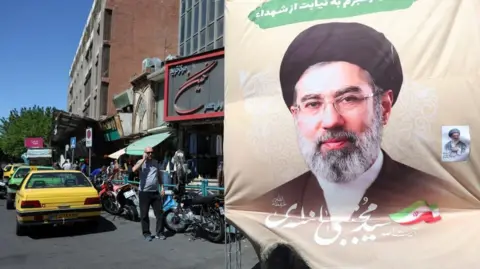
Formally, the answer is clear. Mojtaba Khamenei has assumed the role of supreme leader following the killing of his father, Ali Khamenei, on the first day of the war on 28 February. In the Islamic Republic's system, that position is meant to be decisive. The leader has the final word on almost anything important: war, peace, and the state's strategic direction.
But in practice, the picture is far murkier.
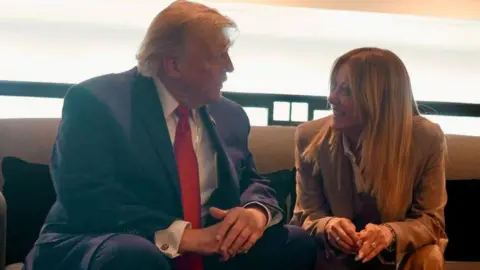
Former US President Donald Trump described Iran's leadership as fractured and suggested the US is waiting for Tehran to produce a unified proposal. Unity was a central theme when Iran's leaders distributed messages to the public stating there was no such thing as a hardliner or moderate in Iran - there was just one nation, one course.
Invisible Leader
Mojtaba Khamenei has not been seen in public since taking power. With few direct actions to demonstrate his leadership, Iranian officials have acknowledged that he was injured during the initial strikes, sparking concerns about his ability to operate effectively.
In Iran's political system, authority is not just institutional; it is also performative. Khamenei's father was known to signal intent through appearances and speeches, leaving a significant void in leadership that Khamenei has yet to fill. Analysts suggest Mojtaba Khamenei's rapid rise may not have allowed him to establish authority, with many questioning his ability to manage the government amid his reported health issues.
Diplomatic Channels Open But Only Just
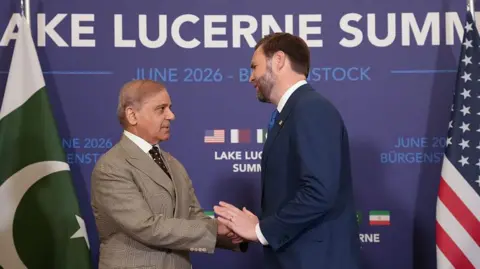
On paper, diplomacy rests with the government, where Foreign Minister Abbas Araghchi continues to engage with US representatives. However, real authority in these discussions is questioned due to the unconventional leadership structure now emerging.
A Military Expanding Remit
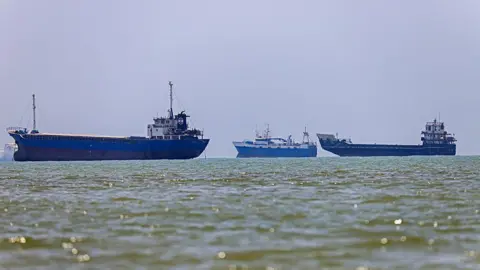
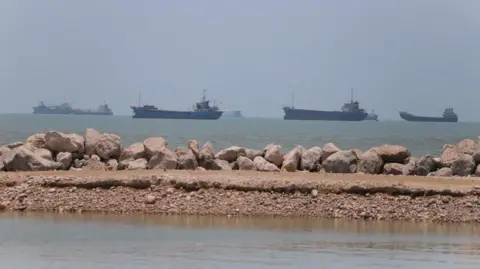
The authority surrounding the crucial Strait of Hormuz now lies more closely with the Islamic Revolutionary Guard Corps (IRGC) rather than the diplomatic corps, indicating a shift in power toward military actors amid uncertainty in civilian leadership.
Ghalibaf Steps Forward
As the situation unfolds, Mohammad-Bagher Ghalibaf, the speaker of parliament, has positioned himself as a visible figure crafting public messaging and negotiations, despite the continuing uncertainty surrounding formal leadership and authority in Iran.
The complexities within the Iranian leadership seem to indicate a system operationally active yet lacking coherent and visible direction. As the country navigates through these tumultuous times, the overarching question of who truly holds the decision-making power in Iran continues to linger.