Bulgaria Embraces the Euro: A Bold Step Amidst Mixed Reactions
Bulgaria - the poorest country in the European Union - has officially adopted the euro as its currency, becoming the 21st member of the eurozone. The move marks a significant milestone for a country that has faced numerous challenges in its economic transformation, raising hopes for a more prosperous future.
For many urban, young, and entrepreneurial Bulgarians, this transition is seen as an optimistic leap forward. It symbolizes Bulgaria’s integration into the European mainstream after its membership in NATO and the European Union, and its desire to join the Schengen zone.
However, sentiments are not universally positive. The move to replace the Bulgarian lev, which has been in use since 1881, has triggered fears and resentment among older, rural populations. Many worry about the potential for price increases and the loss of national identity.
Public opinion appears to be split. Surveys indicate that Bulgaria's population of 6.5 million is evenly divided regarding the euro adoption. Recent political turmoil, including a lost confidence vote for Prime Minister Rosen Zhelyazkov’s coalition government, may complicate the transition further.
For instance, Todor, a small business owner from Gabrovo, expressed his discontent, stating, I don't want the euro, and I don't like the way it has been imposed on us. He believes a referendum would show significant opposition to the euro, highlighting the discontent among certain demographics.
Conversely, some citizens like Ognian Enev, a tea shop owner in Sofia, embrace the euro as a positive change. This shift is perceived as primarily technical and could potentially benefit trade, especially for those who deal with eurozone partners.
As of August 2025, Bulgarian shops have displayed prices in both currencies, facilitating a gradual transition. The exchange rate has been set conveniently, with €1 equivalent to approximately two lev. Some consumer protections against price rounding have also been instituted to alleviate public concern.
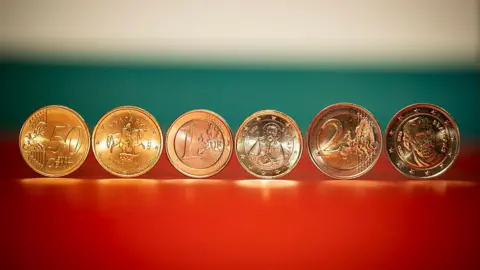
The new €1 and €2 euro coins feature significant Bulgarian symbols, reinforcing cultural identity amidst the change. However, the looming question is how the broader economic landscape of Bulgaria will be affected. Observers point to contrasting examples from other eurozone countries, raising concerns about the potential for stagnation similar to Italy or the success seen in the Baltic states.
As January approaches, Bulgaria prepares for the full integration of the euro, while citizens continue to voice their hopes and fears regarding this pivotal shift in their economy.