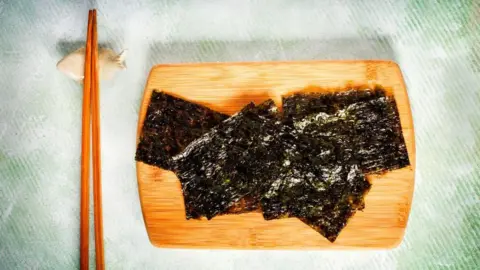
Black, crispy, often flat and square - dried seaweed, known locally as gim - is a humble staple on everyday dining tables across South Korea. But as its global popularity grows, its rising prices are worrying gim-lovers nationwide.
Lee Hyang-ran has been selling gim for the past 47 years. In the past, people from Western countries thought Koreans were eating something weird that looks like a piece of black paper, she says from a small market stall in central Seoul. I never thought I'd be selling gim to them. But now, they all come here and buy it.
South Korea is the world's largest producer and exporter of gim, supplying markets across Asia, North America, and Europe. Exports have risen steadily, hitting a record of $1.13 billion in 2025 according to the Korea Maritime Institute (KMI). As demand rises, so do prices, with one sheet of gim going from about 100 won (approximately $0.06) last year to over 150 won.
Premium products now cost as much as 350 won per sheet, causing a shift for consumers like Kim Jaela, a typical bulk buyer of gim, who is now reconsidering her purchasing habits due to rising costs.
The worldwide appetite for gim is reflective of a growing global demand for Korean goods, spurred by cultural influences such as K-pop and K-dramas. In 2023, the success of products like Trader Joe's Gimbap showcased the rising interest in Korean cuisine.
As consumer demand continues to increase, there are indications that the product's traditional image as an affordable staple may be threatened. Local experts note that rising prices stem not only from overseas demand but also from inflation, labor costs, and decreased production levels. The South Korean government is pledging to intervene, while companies are looking for ways to stabilize prices.
On the streets of Seoul, Lee's stall is bustling as tourists seek out gim. Gim has been selling like hot cakes, she declares, thrilled that Korean gim is gaining popularity.