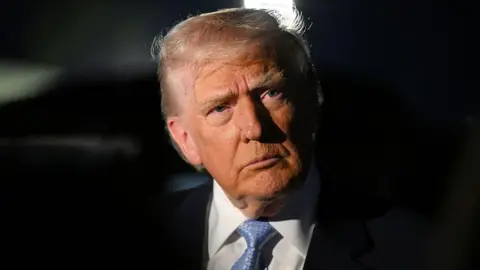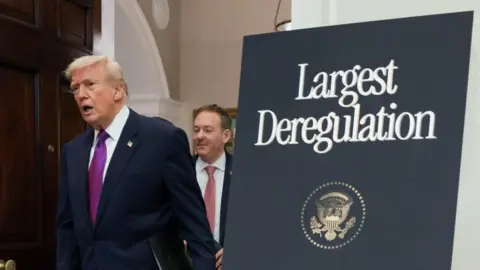
US President Donald Trump has announced he is raising tariffs on South Korean imports to 25% after accusing Seoul of not living up to a trade deal reached last year.
In a post on social media, Trump stated he would increase levies on South Korea from 15% across a range of products including automobiles, lumber, pharmaceuticals, and all other Reciprocal TARIFFS.
Trump claimed that South Korean lawmakers have been slow to approve the deal while we have acted swiftly to reduce our TARIFFS in line with the Transaction agreed to.
South Korea has indicated that it had not received official notification of the decision to raise tariffs on its goods and has called for urgent talks with Washington over the issue.
Additionally, South Korea's Industry Minister, Kim Jung-kwan, currently in Canada, is expected to visit Washington as soon as possible to meet with US Commerce Secretary Howard Lutnick.
The two countries reached a deal last October that included a pledge from South Korea to invest $350 billion (£256 billion) in the US, with some funds allocated for shipbuilding.
This agreement was submitted to South Korea's National Assembly on 26 November and is expected to be ratified in February, according to local media reports.
Under the new tariffs, US companies will face a 25% tax on goods imported from South Korea.
Trump has frequently resorted to tariffs as a means of leveraging foreign policy during his second term in office.
Recently, he warned Canada of a potential 100% tariff if it negotiates a trade deal with China. Chinese officials subsequently clarified that their strategic partnership with Canada does not aim to undermine relations with other countries.
Canadian Prime Minister Mark Carney stated that Canada is not pursuing a free trade deal with China and has conveyed this position to the US.
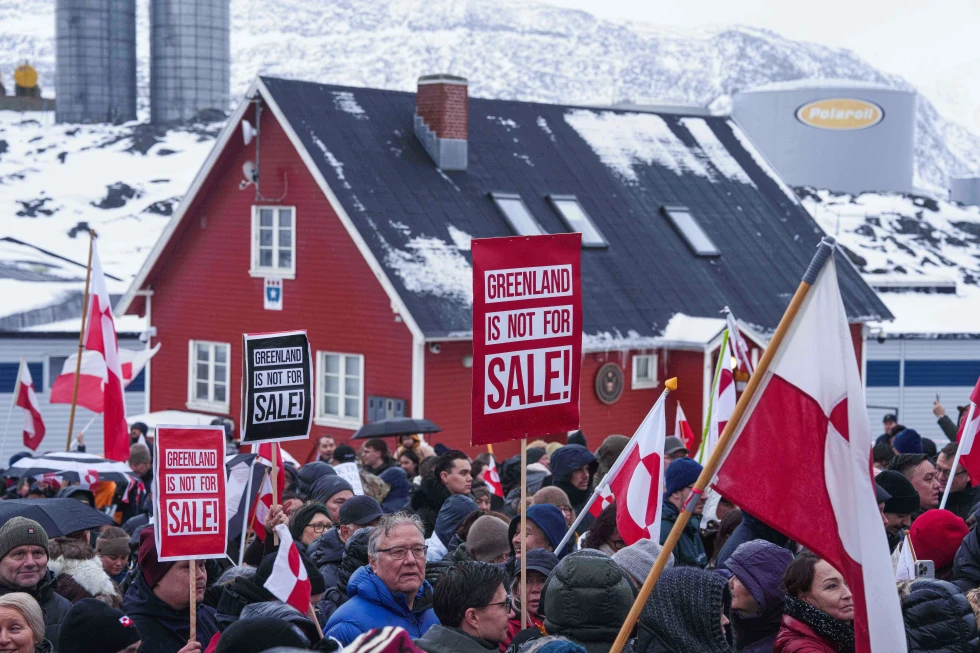
Prior to this, Trump threatened to impose import taxes on eight countries, including the UK, over the US’s plans to procure Greenland, resulting in strained relations with Denmark and other NATO allies.
Although Trump later backed away from the Greenland tariff threats, the situation highlights ongoing tensions in international trade relations.