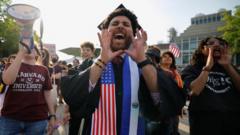
The proclamation, issued on Wednesday, restricts the entry of foreign nationals who intend to study or partake in exchange programs at one of the nation's most prestigious universities. Trump attributed this action to what he termed Harvard’s "extensive entanglements" with foreign countries that he believes threaten U.S. civil rights and security.
This escalation stems from a prolonged legal feud, as Harvard previously refused to comply with various White House requests. The timing of the announcement follows a recent court ruling that barred the Department of Homeland Security (DHS) from implementing an outright ban on international students at Harvard.
Under the new order, not only will new international student visas be suspended, but existing visas for students enrolled at Harvard may also be subject to revocation. A notable point in the announcement was the White House complaint of Harvard's lack of adequate reporting on the activities of foreign students.
In response, Harvard released a statement condemning the proclamation, reinforcing its commitment to protect the rights of its international student community. The university has been facing pressure from the Trump administration, which had earlier frozen federal funding while accusing the institution of allowing antisemitism on campus.
This development follows a similar crackdown by the administration on other academic institutions, further raising concerns about the future legitimacy and stability of international student programs in the U.S. Currently, nearly 7,000 foreign students are enrolled at Harvard, constituting 27% of the student body.
As the situation unfolds, the implications for current and prospective international students at Harvard remain uncertain, particularly as legal challenges to the administration's policies continue in the courts.
This escalation stems from a prolonged legal feud, as Harvard previously refused to comply with various White House requests. The timing of the announcement follows a recent court ruling that barred the Department of Homeland Security (DHS) from implementing an outright ban on international students at Harvard.
Under the new order, not only will new international student visas be suspended, but existing visas for students enrolled at Harvard may also be subject to revocation. A notable point in the announcement was the White House complaint of Harvard's lack of adequate reporting on the activities of foreign students.
In response, Harvard released a statement condemning the proclamation, reinforcing its commitment to protect the rights of its international student community. The university has been facing pressure from the Trump administration, which had earlier frozen federal funding while accusing the institution of allowing antisemitism on campus.
This development follows a similar crackdown by the administration on other academic institutions, further raising concerns about the future legitimacy and stability of international student programs in the U.S. Currently, nearly 7,000 foreign students are enrolled at Harvard, constituting 27% of the student body.
As the situation unfolds, the implications for current and prospective international students at Harvard remain uncertain, particularly as legal challenges to the administration's policies continue in the courts.