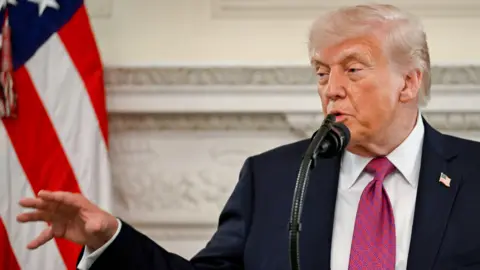
The leaders of the Democratic Republic of Congo (DRC) and Rwanda are set to sign a peace deal aimed at ending the long-running conflict in the region at a summit hosted by US President Donald Trump in Washington.
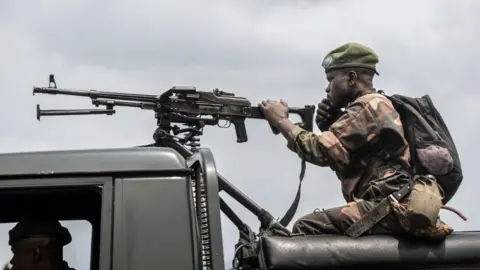
Ahead of the summit, there has been an escalation in fighting in resource-rich eastern DR Congo between government forces and rebels believed to be backed by Rwanda. The DRC's army accused its rivals of attempting to sabotage the peace process, while the M23 rebels claimed the army had launched an offensive in violation of a ceasefire.
At the start of the year, the M23 seized large areas of eastern DRC, resulting in thousands of deaths and displacing more individuals. Presidents Felix Tshisekedi of DRC and Paul Kagame of Rwanda have exchanged sharp criticisms in recent years, both blaming each other for igniting the conflict.
Trump has previously facilitated talks between the two countries, culminating in a peace accord signed by their foreign ministers in June, which he hailed as a notable achievement. The forthcoming signing ceremony will not only feature Tshisekedi and Kagame but also several other African and Arab leaders, including those from Burundi and Qatar.
Despite the high-profile nature of the summit, skepticism surrounds the potential for peace. Analysts express doubts regarding the effectiveness of the agreement due to a lack of active ceasefire measures and continuing military advances by the M23.
Rwanda has denied supporting the M23, despite UN reports suggesting its military controls the group's operations. Tensions remain high as both countries lay conflicting demands for peace, with DRC calling for the withdrawal of Rwandan troops and the disarmament of militant groups, which Rwanda insists is necessary for its security.
While economic opportunities in the region, particularly those related to mineral extraction, have motivated U.S. involvement, both parties will need to navigate intricate political dynamics to reach a substantive resolution.
Ahead of the summit, there has been an escalation in fighting in resource-rich eastern DR Congo between government forces and rebels believed to be backed by Rwanda. The DRC's army accused its rivals of attempting to sabotage the peace process, while the M23 rebels claimed the army had launched an offensive in violation of a ceasefire.
At the start of the year, the M23 seized large areas of eastern DRC, resulting in thousands of deaths and displacing more individuals. Presidents Felix Tshisekedi of DRC and Paul Kagame of Rwanda have exchanged sharp criticisms in recent years, both blaming each other for igniting the conflict.
Trump has previously facilitated talks between the two countries, culminating in a peace accord signed by their foreign ministers in June, which he hailed as a notable achievement. The forthcoming signing ceremony will not only feature Tshisekedi and Kagame but also several other African and Arab leaders, including those from Burundi and Qatar.
Despite the high-profile nature of the summit, skepticism surrounds the potential for peace. Analysts express doubts regarding the effectiveness of the agreement due to a lack of active ceasefire measures and continuing military advances by the M23.
Rwanda has denied supporting the M23, despite UN reports suggesting its military controls the group's operations. Tensions remain high as both countries lay conflicting demands for peace, with DRC calling for the withdrawal of Rwandan troops and the disarmament of militant groups, which Rwanda insists is necessary for its security.
While economic opportunities in the region, particularly those related to mineral extraction, have motivated U.S. involvement, both parties will need to navigate intricate political dynamics to reach a substantive resolution.