
In brief
At the TRT World Forum in Istanbul, Turkish Foreign Minister Hakan Fidan called for a worldwide cooperation scheme to secure critical maritime chokepoints and strengthen global connectivity. He cited growing military confrontations, disruptions to grain shipments in the Black Sea and energy supplies through the Strait of Hormuz and Bab el‑Mandeb, urging practical arrangements founded on regional ownership and sustained diplomacy. The minister highlighted Turkey’s own Middle Corridor and Development Road Project as models of diversifying transit routes, while stressing that no nation can remain insulated from the spill‑over effects of an insecure international environment.
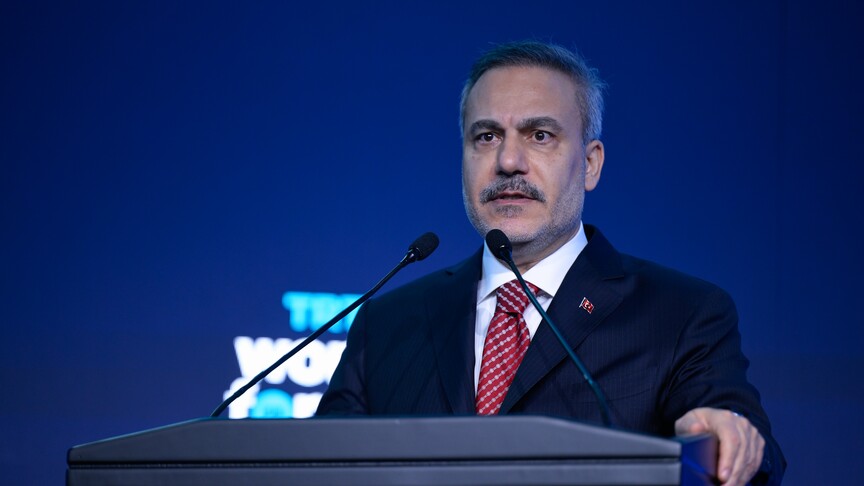
On Saturday, 7 November 2026, Turkish Foreign Minister Hakan Fidan delivered a statement at the TRT World Forum in Istanbul that set a new tone for maritime security. He called for the design of a global initiative aimed at safeguarding critical chokepoints, warning that escalating tensions in the Black Sea and the Middle East threaten the stability of international trade and security.
Fidan reiterated that maritime lanes can become theaters of conflict, adding that “No country, however powerful, can insulate itself from the consequences of a fragmented and insecure international environment.”
“Your security cannot be sustained at the expense of the security of the others,” he said, emphasizing that cooperation must emerge from the priorities of the concerned countries rather than being imposed from the outside.According to Anadolu Agency, the minister’s remarks were part of a broader diplomatic appeal stressing regional ownership of solutions and the need for sustained diplomacy.
He highlighted the experiences of the Black Sea, describing how it has increasingly become an arena of military confrontation. Fidan noted a rise in attacks on commercial vessels and disruptions to maritime traffic that threaten the flow of essential goods, “particularly grain shipments.” The minister pointed to the security risk posed by such incidents for both the region and world markets.
Turning to the Middle East, Fidan expressed concern over the “growing insecurity around the Strait of Hormuz and Bab el‑Mandeb.” He characterized Israel’s expansionist policies, its continued aggression against neighboring countries, and the “genocide in Gaza” as undermining regional stability and hampering prospects for lasting peace, adding that these developments expose the global economy to additional vulnerability.
Complementing his warnings, Fidan drew attention to Turkey’s own regional projects that aim to diversify supply routes. He cited the Middle Corridor as a newly developed route connecting Central and Western Asia with Europe, and the Development Road Project, a coastal infrastructure initiative that seeks to enhance connectivity across the Black Sea. These projects are described by the minister as examples of “efforts to diversify supply routes and improve resilience.”
Background and Regional Projects
Turkey’s geopolitical position places it at the crossroads of key maritime pathways, from the Bosporus Strait in the north to the Dardanelles and through the Red Sea via the Bab el‑Mandeb. The country’s investment in new infrastructure reflects its desire to reduce dependence on any single chokepoint. The Middle Corridor, for instance, offers an alternative north‑south trade artery that bypasses the Suez Canal, while the Development Road Project extends along the Black Sea coast, improving the movement of goods across the region.
In supportive comment, experts from the GCC region have also underscored the importance of strengthening energy and grid infrastructure to match the expanding renewable energy portfolio. While the GCC’s focus is largely on energy and power transmission, its recognition of the interconnected nature of global supply chains adds a complementary perspective to Fidan’s maritime security narrative.
Open questions remain regarding the practicalities of such a global framework. Critics or observers question who would lead, how responsibilities would be shared, and which institutions would legitimize or enforce new protocols. Fidan’s call for “regional ownership” suggests that he envisions a coalition of neighboring states taking the lead, but details on mechanisms, verification, and compliance remain uncertain.
Despite the lack of a concrete blueprint, the Turkish minister’s speech has already drawn attention from several bordering navies and shipping companies that view growing tension in the Black Sea and the Southwest Indian Ocean as a threat to the uninterrupted flow of cargo and energy supplies.
As the world watches the comments from Ankara, the need for a structured, multilateral dialogue that balances security concerns with commercial interests will likely become the focal point of upcoming policy discussions among maritime powers.



