Apple has committed to revising its controversial AI feature, Apple Intelligence, after receiving complaints about misinformation conveyed in news alerts. This decision comes after the BBC highlighted multiple instances of the AI generating inaccurate summaries, prompting public concern regarding the reliability of news from the tech giant’s devices.
In its first public acknowledgment of the issue, Apple stated on Monday that it is working on a software update designed to improve the clarity of notifications produced by its AI system. This update aims to explicitly differentiate between traditional news alerts and those summaries generated by Apple Intelligence. The company is facing escalating demands to halt the functionality of the AI feature due to its erroneous outputs.
The BBC initially raised alarm last month when an AI-generated notification inaccurately reported that Luigi Mangione, the man charged with murdering UnitedHealthcare CEO Brian Thompson, had killed himself. More recently, the AI falsely claimed that Luke Littler had already won the PDC World Darts Championship hours before the event was set to begin, and misrepresented Rafael Nadal's sexual orientation.
In their statement regarding the situation, the BBC expressed significant concern over how these inaccuracies damage not just its reputation but also the overall trust in the media. "These summarisations by Apple are spreading misinformation which does not reflect – and in some cases completely contradicts – the original BBC content," emphasized the BBC. They insisted that prompt remedial measures are needed from Apple.
The tech giant assured users that the update, expected to be rolled out in the next few weeks, will enhance distinction in notification types, informing users when summaries originate from the AI system. Previously, Apple had touted these notification summaries—consoling related alerts into brief summaries on user lock screens—as designed to help users quickly grasp key information.
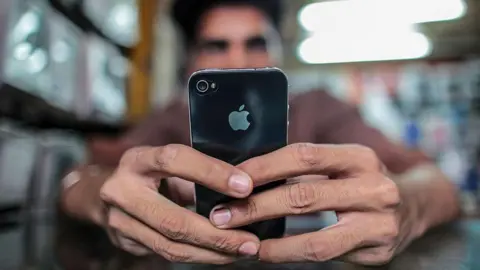
The Apple Intelligence feature is in a testing phase and is currently available only on the iPhone 16 models, iPhone 15 Pro and Pro Max running iOS 18.1 and above, as well as certain iPads and Macs. The application has been rolled out in the UK since December.
Reports have surfaced on social media showcasing other quirky misinterpretations by Apple’s AI technology. Even a ProPublica journalist pointed out alarming inaccuracies in Apple AI's summaries derived from the New York Times, incorrectly indicating that Israeli Prime Minister Benjamin Netanyahu had been arrested.
In light of these recurring issues, Reporters Without Borders has called on Apple to suspend the technology, pointing to the generative AI's unreliability as a public concern. As a competitor in the AI realm, Apple is not alone in facing challenges; entities such as Google have also encountered criticism for erratic responses generated by their AI tools.
As the technology continues to develop, Apple insists that user feedback is instrumental in improving the performance of its AI features. The expectation is that the forthcoming update will address current limitations as well as enhance the overall user experience.