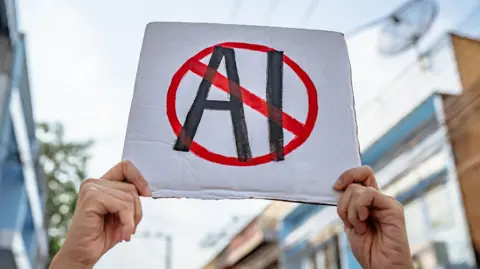
Organizations worldwide are racing to develop a universally recognized label for human-made products and services as part of the growing backlash against AI use.
Declarations like Proudly Human, Human-made, 'No A.I and AI-free are appearing across films, marketing, books and websites.
It is in response to fears that jobs or entire professions are being swept away in a wave of AI-powered automation.
BBC News has counted at least eight different initiatives trying to come up with a label that could get the kind of global recognition that the Fair Trade logo has for ethically made products.
But with so many competing labels - as well as confusion over the definition of AI-free - experts say consumers are in danger of being left confused unless a single standard can be agreed on.
AI is creating significant disruption and competing definitions of what is 'human made' are confusing consumers, says consumer expert Dr Amna Khan from Manchester Metropolitan University.
A universal definition is essential to build trust, clarification and confidence she told BBC News.
The movement to create AI-free certification systems follows generative AI tools being used to replace human work and creativity in a range of industries including fashion, advertising, publishing, customer services, and music.
The organisations trying to come up with the labels include companies as well as non-profits, based in the UK, Australia, and the US.
How the certifications work
Some labels like no-ai-icon.com, ai-free.io and notbyai.fyi, can be downloaded by anyone for free or for a fee without much or any auditing.
Other systems like aifreecert require payment and have a strict process of vetting whether or not a product has used AI. Auditors use professional analysts and AI-detecting software.
But AI experts say that getting industries to agree on what truly counts as human made will prove complicated as AI is integrated into so many everyday tools.
Generative AI-free
In the closing credits of the 2024 Hugh Grant thriller Heretic, producers wrote a disclaimer saying: No generative AI was used in the making of this film. The distributor has also published its own classification online that it hopes others in the industry will follow.
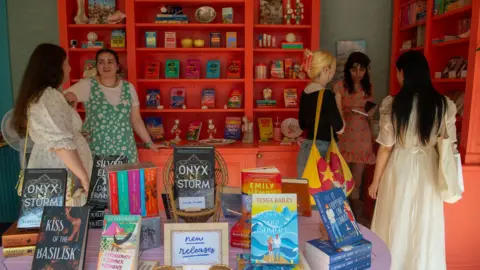
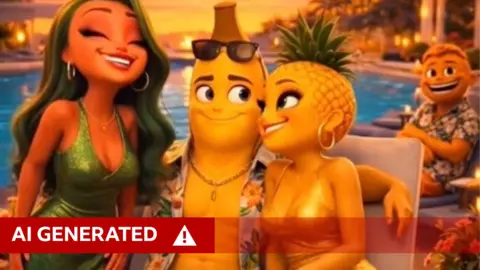
The arts industry is particularly rife with AI-made products and seems to be the current focus for the push back against AI use. Entire books and films are being made quickly and cheaply with AI, leading to a new challenge for consumers.
Some products that rely on AI don't clarify that to their consumers, causing confusion and mistrust.
Overall, as the debate continues, the necessity for a trusted standard that reflects the human experience versus machine imitation becomes increasingly significant.