Margaret Hamilton, whose revolutionary software kept the Apollo 11 Lunar Module on course during its historic Moon landing, has died at 90.
Born in Indiana in 1936, Hamilton earned a B.A. in mathematics from Earlham College in 1958 and later joined MIT, where she would lead the Software Engineering Division from 1959 through the 1970s. Her team’s code was the first instance of an operating system designed for spaceflight, and it introduced the discipline now known as software engineering.
During the moment the historic Apollo 11 probe approached the Moon, an onboard computer alarm indicated a potential overload. Hamilton’s priority‑driven software architecture instantly de‑prioritized non‑essential background tasks, giving the landing code the bandwidth it needed to execute flawlessly – an event that preserved the mission and the lives of Neil Armstrong and Buzz Aldrin.
In 2016 President Barack Obama presented Hamilton with the Presidential Medal of Freedom, recognizing her pioneering spirit as a woman in a male‑dominated field who helped send humans beyond Earth.
After her MIT tenure, she founded software firms, including Hamilton Technologies, continuing her mission to innovate in high‑reliability systems. Her influence endures in the careers of countless engineers and in the methodologies that now underpin critical software worldwide.

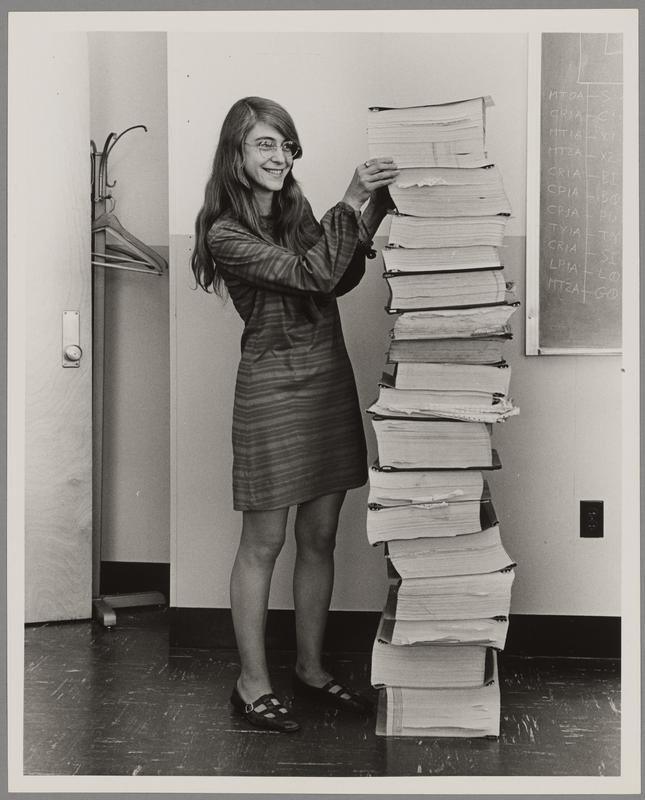
Hamilton with the printed computer code in 1969.