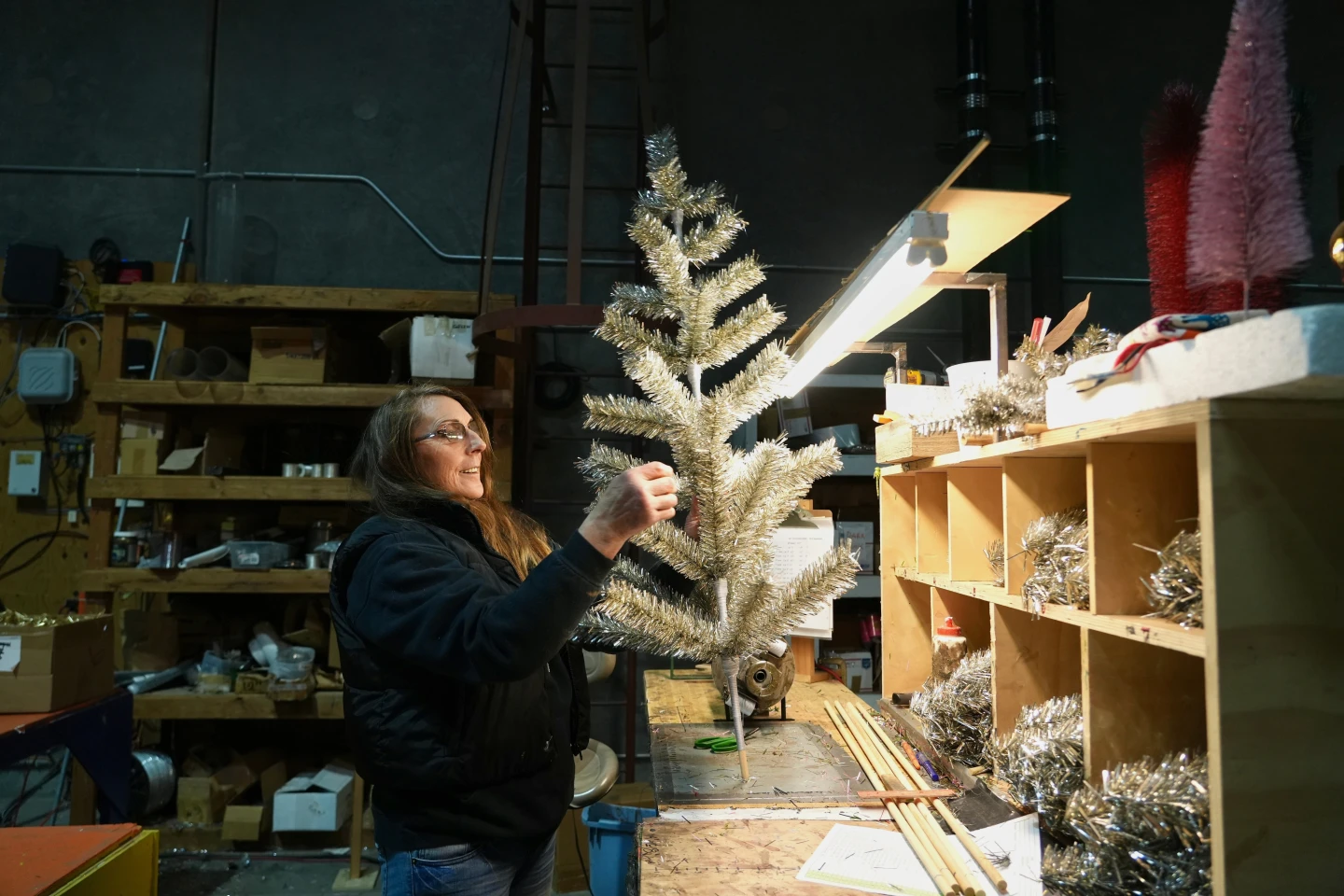
This December, Mark Latino and his team at Lee Display in Fairfield, California, are busy producing tinsel for the holiday season using a nearly century-old machine that rolls out strands of bright silver. Latino heads a family-owned business that has transitioned from creating handmade flowers for hats to manufacturing artificial Christmas trees, producing around 10,000 each year.
Tariffs enacted in recent years have illuminated the reliance of U.S. consumers on foreign-made decorative items, pushing prices for artificial trees up by 10 to 15%, according to industry reports. The American Christmas Tree Association indicated that while consumers are sensitive to price changes, manufacturers remain hesitant to relocate production back to the U.S. due to the labor-intensive nature of tree production.
With 80% of U.S. households opting for fake trees for at least 15 years, the preference for artificial over natural trees is evident. Convenience plays a crucial role, with most fake trees sold today already equipped with lights. These factors have contributed to the migration of tree production overseas, primarily in countries like China, where labor is considerably cheaper.
As consumer preferences shift, American companies face the challenge of balancing local production and rising costs. Lee Display, for example, has kept its operations local in part due to the control it allows over the production quality, but the tariffs have pressed them to rely on existing stock for lighting, with plans to import later and potentially incur higher costs.
In a changing economic landscape, manufacturers are exploring diverse sourcing options beyond China, though decreased demand influenced by tariffs poses additional challenges. The overall outlook for the Christmas tree industry is tinged with uncertainty, as businesses navigate supply chain issues, pricing strategies, and the persistence of holiday traditions.