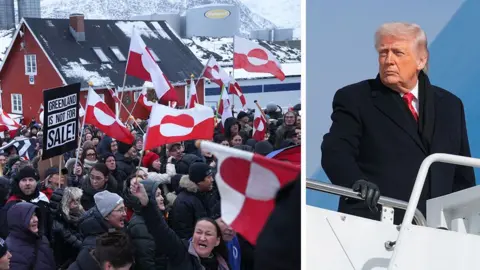
The recent Greenland crisis has not gone unnoticed by US allies, who may hold onto the memory of Donald Trump's aggressive rhetoric around the territory. This episode unfolded after a successful military operation in Venezuela raised Trump's confidence, leading to claims of ownership and threats of military action against traditional allies in Europe.
A significant shift occurred when NATO Secretary General Mark Rutte reportedly intervened to diffuse the situation. Following discussions with Denmark's and Greenland's foreign ministers, an agreement was reached to form a 'working group' to discuss Greenland's future. This included potential increased military presence, all aimed at countering Russian and Chinese influence in the Arctic.
A notable proposal involves Denmark possibly ceding sovereignty over select areas of Greenland for US military base development, akin to the UK's setup in Cyprus. While details remain unclear, these conversations have sparked concerns among allies about the frailty of established diplomatic norms, with some leaders characterizing the events as a rupture of the old order. The aftermath might see a shift towards greater European independence as NATO maneuvers to bolster Arctic security.
The seriousness of Trump's initial threats and their implications for alliances may be a lesson for US diplomacy going forward, reminding allies that such crises can have lasting effects on trust and cooperation in international relations.