In brief
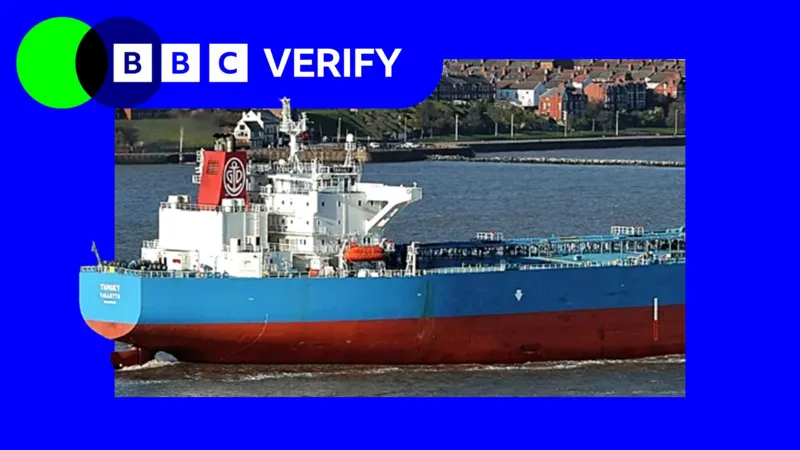
After the Royal Marines seized the uninsured Smyrtos earlier this week, the Russian-flagged tanker Forwarder sailed into the English Channel on Wednesday, marking the first appearance of a shadow‑fleet vessel. The ship, which is part of a fleet used to sidestep sanctions on Russian oil, has been monitored by the Royal Navy's HMS Tyne and may be escorted by the Russian frigate Admiral Grigorovich. British officials say they will take each vessel on a case‑by‑case basis before any boarding, but analysts warn that a boarding could represent a new escalation step. The incident comes amid increasing evidence that sanctioned vessels are shifting to longer routes around the west coast of Ireland to avoid the Channel.
On Wednesday evening the Russian‑flagged tanker Forwarder entered the English Channel, the first such movement of a “shadow fleet” vessel since the UK forces boarded and seized the uninsured cruise ship Smyrtos earlier in the week.
The Forwarder, which departed Russia’s Arctic port of Primorsk last week after loading oil from the country’s largest Baltic refinery, is transmitting a final destination of Dongying, China. Ship‑tracking data shows the tanker moved south along the Channel’s coast and may have been escorted by the Russian frigate Admiral Grigorovich, which had fired warning shots at a British yacht earlier this week.
“Any target ship will be individually considered by law enforcement, military and energy market specialists before an operation is executed,” a spokesperson for the Ministry of Defence said. However, the Ministry had to refuse a comment on the Forwarder’s operational planning, warning that public disclosure could limit its effectiveness in taking action against the vessel.
The Forwarder itself was sanctioned by the UK, the US and the EU in 2025, after the British government accused it of smuggling Russian oil; the ship has previously changed its name twice to avoid detection. The vessel’s flag is Russian and its ownership structure remains opaque, but there is no indication it is a false flag. Its participation in the shadow fleet is part of a wider mechanism by which Russia routes 75 % of its sanctioned oil through more than 700 aging tankers that use flags of convenience to circumvent international sanctions.
The Royal Navy’s HMS Tyne was seen in the area near the Forwarder’s track, suggesting that naval forces are monitoring the vessel’s movements closely. A NATO spokesperson confirmed that the Admiral Grigorovich stayed near its last known position following the shooting incident, but has not confirmed it is accompanying the Forwarder.
Experts warn that targeting a Russian‑flagged vessel could be a step up in escalation, potentially provoking direct confrontation with Russia. Former Belgian naval officer Frederik Van Lokeren noted that “going after vessels that are falsely flagged or misusing a flag of convenience is one thing, but this would be going after Russia directly.” In contrast to the unregistered Smyrtos, the Forwarder has a clear flag, which weakens the case for an assault.
Following the Smyrtos seizure, ship‑tracking data showed many sanctioned vessels altered their course to avoid the Channel, with a growing number now taking a longer route around the west coast of Ireland. BBC Verify estimates that almost 200 shadow‑fleet vessels have passed through the Channel in the months since Prime Minister Keir Starmer announced that British forces could board sanctioned vessels in their waters. In at least 94 instances, private ships entered UK territorial waters, the 12‑nautical‑mile zone surrounding Britain’s coast.
While the UK has stated it can now board sanctioned vessels that operate illegally within its jurisdiction, most experts predict it will remain cautious about acting against the Forwarder, given its Russian flag and the risk of escalating tensions with Moscow. The case of the Smyrtos, on the other hand, clears a more straightforward legal basis for boarding because the ship operated without a registered flag and was found to be in breach of sanctions. The incident underscores the complex and evolving challenges of enforcing sanctions on oil exports amid an ongoing conflict in Ukraine.