In brief
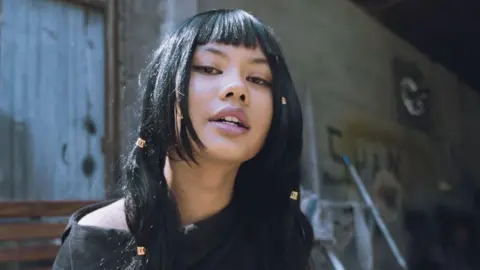
At just 24 years old, Reble has emerged as a leading voice in Indian hip-hop, using her music to express her unique identity. Her rise reflects a broader cultural shift with artists from India's northeast gaining wider recognition. Known for her cool delivery and deep emotional resonance, Reble's music navigates themes of distance and reinvention, while remaining deeply rooted in her indigenous heritage.
As a child, Reble often felt she was watching life from the sidelines. Now, at 24, the rapper has become one of the most compelling new voices in Indian hip-hop. Hailing from the rain-soaked hills of Meghalaya in India's northeast, Reble raps in English as well as Khasi and Jaintia—indigenous languages spoken by tribal communities in the region. She writes about distance, reinvention, and survival with an emotional restraint that feels unusually deliberate.Until recently, she was known mostly within Shillong's close-knit music circles, a city better recognized for rock bands, church choirs, and old guitar legends than hip-hop. Her breakthrough came with Dhurandhar, the Bollywood action film whose soundtrack introduced millions to her cool, clipped delivery. Tracks like Run Down the City: Monica, Naal Nachna, and Move - Yeh Ishq Ishq quickly made her a fan favorite.Her latest single, Praying Mantis, continues the momentum, captivating fans with its dark, hypnotic vibe. Reble's rise mirrors a broader trend, as artists from India’s northeast are starting to find audiences beyond their region. Traditionally viewed as outsiders in their own country, Reble represents a wave of change fueled by digital access and cultural crossover.What makes her compelling is her refusal to conform. I don’t like anybody telling me what to do, she asserts, a sentiment shaped by a childhood of feeling out of place and resisting authority. Before adopting the stage name, she was known as Daiaphi Lamare, often perceived as an oddball during her school years. This perceived misfit status uploads into her music; rap became a medium through which she could articulate her feelings of not belonging.Reble's style incorporates multilingual elements, navigating between English and indigenous languages, revealing the tension between her cultural roots and modern influences. While many Indian rappers display brashness, her approach is understated, focusing on emotional depth rather than explosive bravado.Reble is also unbothered by backlash, such as accusations of “selling out” post-Bollywood success, viewing it as part of her journey. Her connection to Shillong and its music scene not only informs her sound but also grounds her identity.Reflecting on her trajectory, Reble emphasizes the importance of perseverance, seeing her emergence as the result of relentless dedication. Amid the evolving landscape of Indian pop culture, she champions the mix of the local and global, carving her niche among rising stars from traditionally marginalized regions.