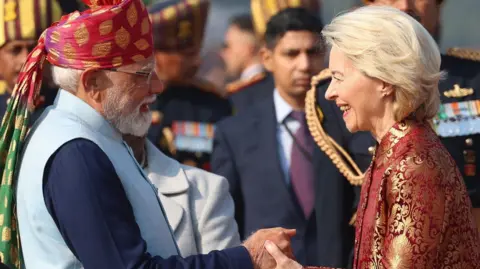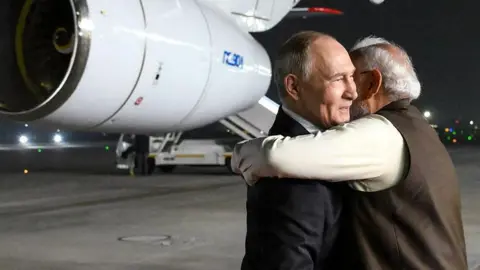
Russian President Vladimir Putin has arrived for a two-day visit to India, where he was warmly welcomed by Prime Minister Narendra Modi ahead of their annual summit. This meeting is particularly crucial as India contemplates maintaining its significant oil imports from Russia amidst increased pressure from the United States.
During this visit, which follows months of international diplomatic shifts, Delhi and Moscow are expected to finalize several key agreements. The backdrop of U.S. attempts to curb India's oil dependence on Russia adds another layer of complexity to the discussions.
India and Russia have sustained a close alliance for decades, characterized by strong economic ties, notably in defense and energy sectors. The Russian oil imports have surged dramatically from 2.5% pre-Ukraine invasion to approximately 35% recently, as India takes advantage of discounted prices due to Russia's isolation from Western markets.
Amid discussions of weapons purchases and economic cooperation, the geopolitical implications of this summit highlight Modi's delicate stance of strategic autonomy. Faced with calls from Western allies to condemn Russia's actions in Ukraine while trying to maintain positive relations with Moscow, Modi's balancing act is critical.
Furthermore, trade dynamics are also a focus area, as India seeks to rectify the trade imbalance significantly skewed in favor of Russia. Defense systems, particularly amidst rising tensions with regional adversaries, are anticipated to be a focal point of negotiations.
Russian analysts suggest this meeting is not merely about rekindling Cold War-era bonds but a negotiation over trade, security, and navigating the complexities of global supply chains. Modi's demonstration of continued partnership with Putin, despite Western sanctions, could reshape regional economics and India's global standing.