In brief
As the Artemis II mission approaches a planned launch in April 2028, NASA draws comparisons to the Apollo program while embracing a more diverse and safety-focused approach. The mission will circle the moon, featuring a progressive crew composition and lessons learned from past missions. Competition with China and an emphasis on sustainable lunar exploration define this new chapter in human spaceflight.
CAPE CANAVERAL, Fla. — NASA is gearing up to embark on Artemis II, humanity's first crewed journey to the moon in over 50 years. This upcoming mission inevitably stirs comparisons to the historic Apollo program, yet the Artemis initiative aims to write a new chapter in space exploration.
The Artemis II crew is expected to perform a slingshot maneuver around the moon, prioritizing safety above all. Notably, this mission marks a significant cultural shift, as the crew includes a woman and a person of color among its ranks, representing a more diverse workforce.
NASA astronaut Christina Koch, a member of the Artemis II crew, stated, “There is no way we could be that same mission or ever hope to even be.” This statement encapsulates the ambition to not only honor the groundbreaking Apollo missions but to redefine smart exploration in a modern context.
Building Upon the Past
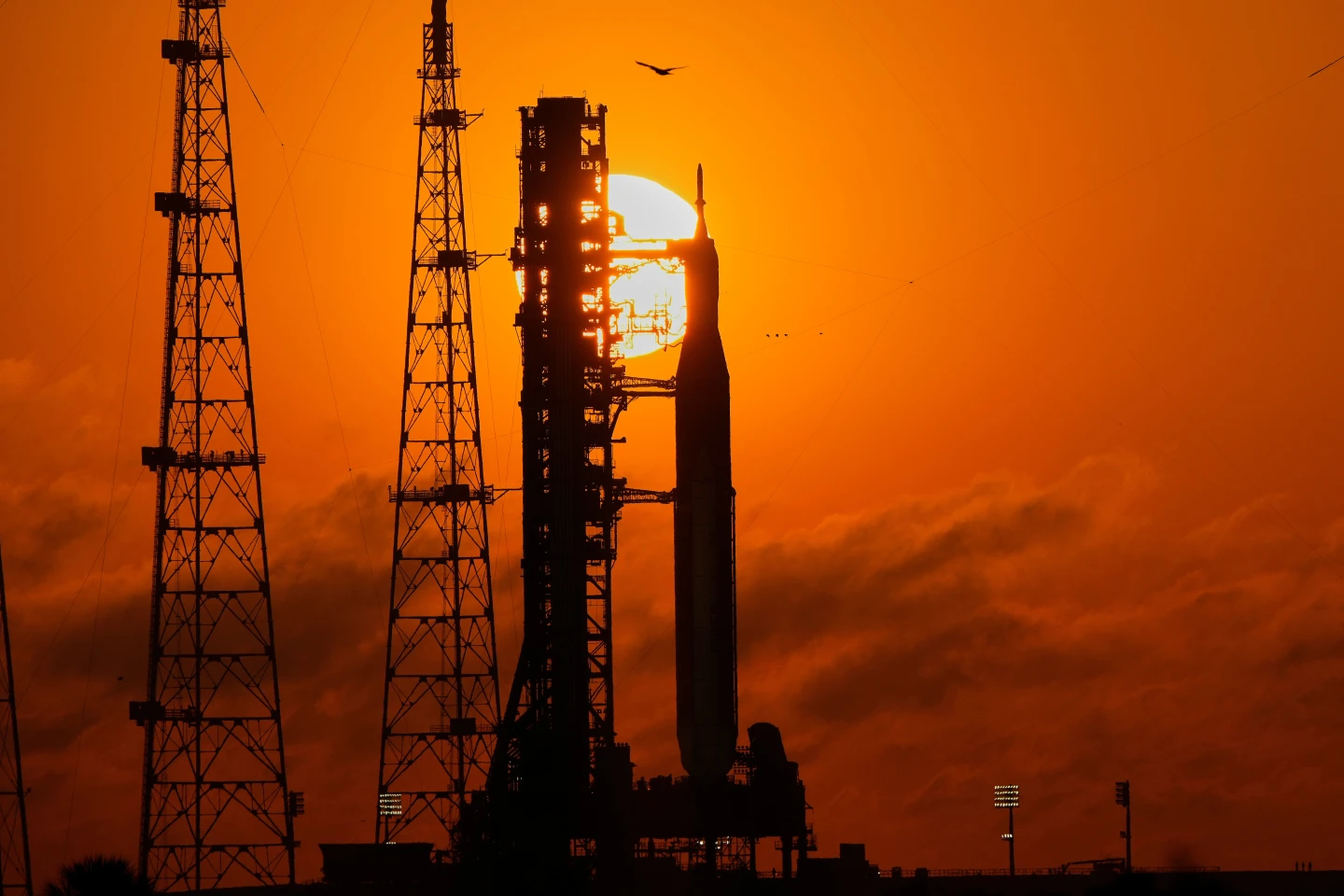
The Apollo missions swiftly advanced America’s space endeavors. From the first astronaut's launch to Apollo 11 landing humans on the moon, NASA achieved remarkable outcomes in just eight years. Conversely, Artemis has progressed at a more cautious pace due to varied strategic considerations, including a significant focus on both moon and Mars exploration. The Space Launch System (SLS), NASA’s latest moon rocket, has only completed one uncrewed test flight to date, resulting in delays that have pushed back Artemis II's launch time.
With plans for Artemis IV in 2028, NASA is recalibrating the Artemis agenda to include a mission before the actual moon landing, reminiscent of Apollo’s preparatory objectives between missions. Upcoming missions may focus on practicing lunar docking operations with landing modules under development by private firms like SpaceX and Blue Origin.
Global Competition
Unlike the Soviet rivalry during the Apollo era, NASA now faces competition from China. As China ambitiously aims to establish its lunar capabilities, NASA is determined to project leadership in space. Both nations target regions on the lunar south pole, believed to hold rich ice deposits crucial for long-term habitation.
NASA's new administrator, Jared Isaacman, is committed to maintaining a competitive edge in this renewed space race. “If we can contribute a little bit to hope for humanity,” said Victor Glover, Artemis II pilot, speaking on the global significance of the mission.
Comparative Technologies
The technological leap is noteworthy; while the Saturn V rockets measured at 363 feet, the Artemis SLS stands at 322 feet yet surpasses the Saturn in thrust capacity. Furthermore, while the legacy Apollo missions experienced early-stage complexities, Artemis has already undergone extensive preparations toward mission safety.
Aiming Beyond Earth
The Artemis program not only seeks lunar exploration but also lays foundations for a sustainable future on Mars. The first Artemis moon landing aims for astronauts to spend nearly a week on the lunar surface, a significant expansion from Apollo's brief stays. NASA’s appropriated $20 billion budget lays the groundwork for this ambitious vision of establishing a lunar base.
As Artemis II takes shape, it promises to blend legacy with progress, aiming to inspire a new generation of explorers in a journey back to the moon and beyond.