In brief
At 90 years old, Apollo astronaut Harrison 'Jack' Schmitt reflects on his historic moon landing during Apollo 17 and discusses the significance of lunar exploration in the context of modern missions like Artemis II.
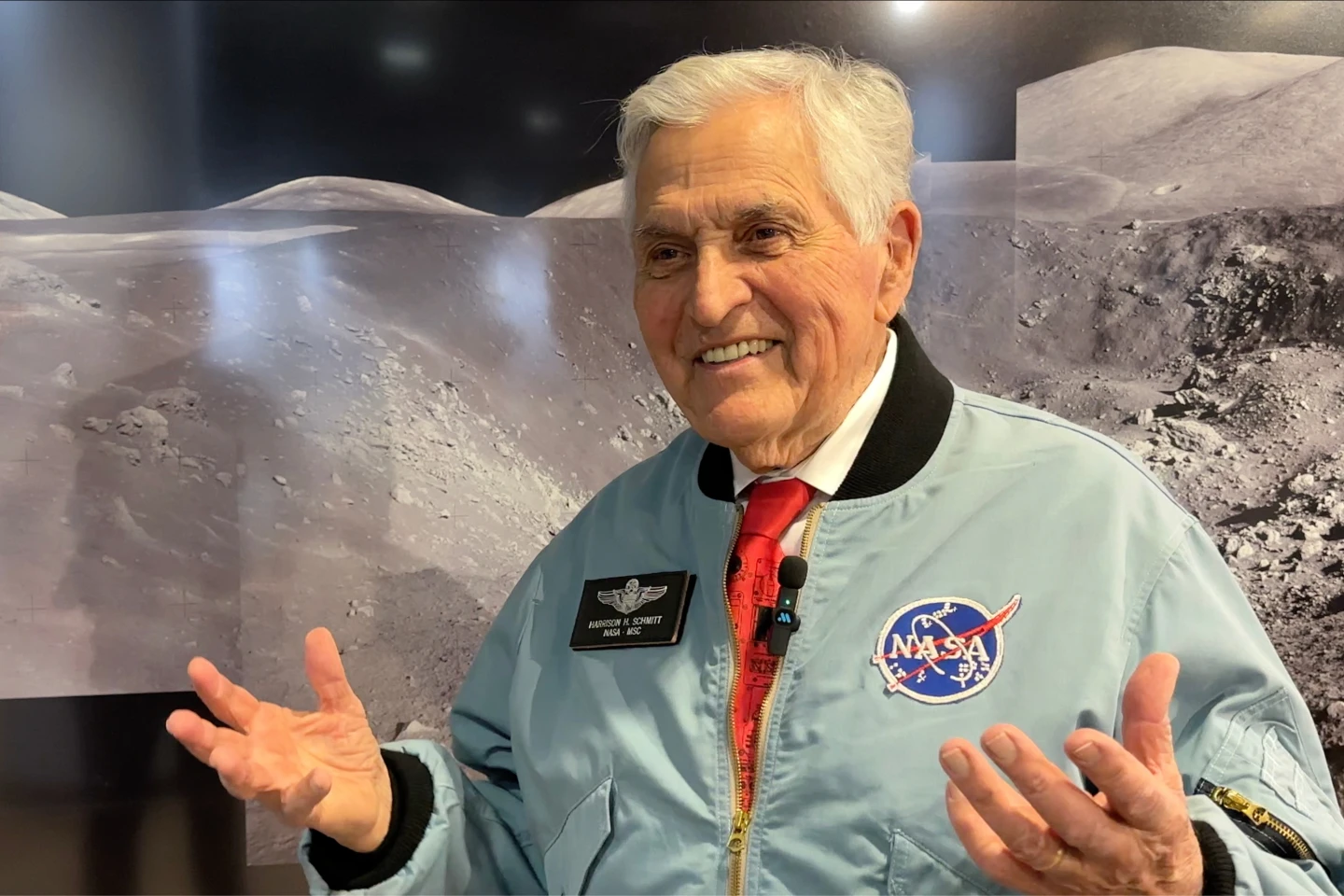
ALBUQUERQUE, N.M. — In 1972, Apollo astronauts Harrison Jack Schmitt and Eugene Cernan made their mark in space history by stepping onto the lunar surface, collecting invaluable rock and soil samples. As one of the only four moonwalkers still alive at 90, Schmitt's legacy as the first scientist on the moon inspires future generations. Reflecting on that iconic day over a crackly radio signal, Schmitt said, Let’s see them leave footsteps like these someday, expressing hope for ongoing lunar exploration. He is heartened by the recent Artemis II mission—reminding the world of the excitement and potential of space travel. In an interview with The Associated Press, Schmitt discussed plans for establishing a lunar base, which he argues is essential for geopolitical presence in space and offers resources that could significantly reduce the cost of missions to Mars. The moon, according to Schmitt, is a library of solar system history, serving as a key to understanding Earth and the universe. Addressing the potential of moon-derived resources, Schmitt highlighted the significance of helium-3—a rare isotope that could revolutionize energy production without nuclear waste. He noted the growing global interest in this resource, citing it as a driver for a new space race, particularly with China. The conversation also delved into Schmitt’s experiences in the dramatic Taurus-Littrow Valley where characteristics of lunar gravity made work feel akin to childhood play. Despite the unique challenges of living in a weightless environment, he believes that long-term habitation on the moon is feasible, though issues like radiation need addressing. Schmitt's insights extend to the search for extraterrestrial life and the importance of engaging youth in STEM fields to foster the next generation of explorers. As he reflects on advancements since Apollo, he emphasizes the integration of commercial technologies into NASA's renewed vision for deep space exploration. Harrison Schmitt embodies a bridge from the past to a promising future in lunar exploration, advocating for a partnership between Earth and the moon that could extend humanity's reach into the cosmos.