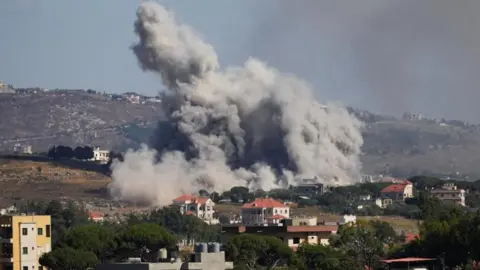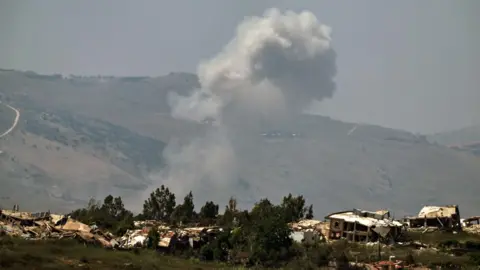
Lebanon has accused Israeli aircraft of spraying an agricultural herbicide over southern villages at dangerously high concentrations, raising concerns about food and environmental security.
The agriculture and environment ministries confirmed that laboratory tests identified the chemical as glyphosate, with concentrations in some samples reported to be 'between 20 and 30 times the levels usually accepted.'
President Joseph Aoun condemned the action, describing it as a violation of Lebanese sovereignty and an environmental and health crime. The Israeli Defense Forces (IDF) have not commented on the allegations.
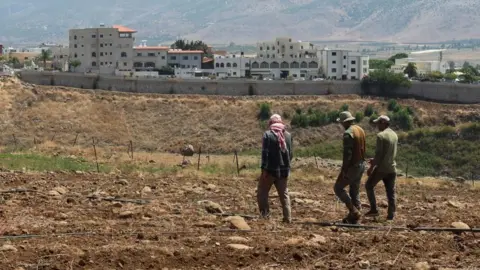
Residents of border villages reported the herbicide spraying, occurring more than a year after a ceasefire concluded a conflict between Israel and Hezbollah. The intentions behind the aerial application of the herbicide remain uncertain.
Earlier in the week, UN peacekeepers in Lebanon were informed by Israel of planned spraying near the border, which resulted in the cancellation of some operations. This incident has raised alarms as it is not the first occurrence of Israeli forces deploying unknown chemicals over Lebanese territory.
With many displaced from the recent hostilities, challenges to returning home are increasing, particularly as affected areas heavily depend on agriculture. Ramzi Kaiss from Human Rights Watch pointed out that the incident complicates recovery efforts in communities reliant on olives and tobacco cultivation.
Environmental groups have expressed concerns over the impact on agriculture and soil fertility, stressing that such actions threaten already damaged ecosystems.
Despite ongoing debates about glyphosate's safety—being classified by the World Health Organization as 'probably carcinogenic to humans'—the Lebanese foreign ministry plans to submit a formal complaint to the UN Security Council regarding this issue.