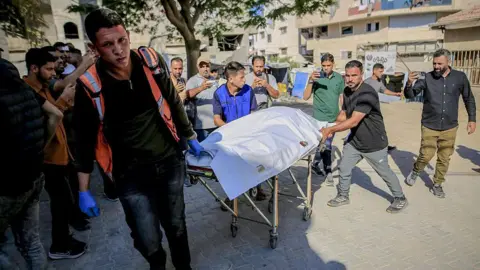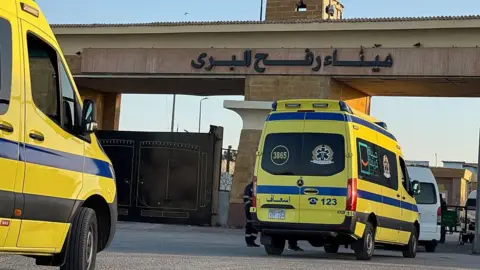
The Rafah border crossing, a crucial passage for many Palestinians trapped in Gaza, has reopened for the first time since being largely closed following its capture by Israeli forces in May 2024. On Monday, the crossing facilitated the transfer of only a limited number of sick and wounded individuals from Gaza to Egypt, reflecting ongoing humanitarian concerns in the region.
Reports indicate that while around 20,000 sick and injured Palestinians await exit for treatment, only five patients and their companions managed to cross on the first day the border reopened. This opening comes after much anticipation, as it was long tied to the return of the last Israeli hostage's body, which occurred last week.
The reopening aligns with a phase of U.S. President Joe Biden's ceasefire plan aimed at easing tensions between Israel and Hamas, launched last October. However, the small number of individuals allowed through has sparked frustration among Gazans, who see the crossing as a vital link to the outside world.
Palestinian officials attributed the delays to stringent Israeli security checks, yet there was no immediate response from Israeli military sources. Reports suggest that only 50 patients would be allowed through the crossing daily, alongside a return of 50 others who had previously left Gaza.
The crossing is now under a new management structure that includes oversight by the European Union Border Assistance Mission, with local Palestinian staff also involved. This updated approach is intended to facilitate safer and more efficient operations at the border.
Residents have voiced their concerns, highlighting the disparity between the urgency of their needs and the limitations placed on their movement. For instance, Sabrine al-Da'ma expressed her hope to travel for treatment for her daughter, emphasizing the critical nature of their situation amidst ongoing challenges in Gaza.
International reaction to the crossing reopening has been mixed, with calls for more robust humanitarian aid to flow into Gaza, as many residents remain hopeful for a more significant change to their plight as negotiations and peace efforts continue.