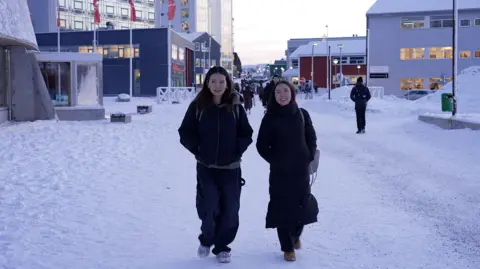
The geopolitical spotlight is shining brightly on Greenland, a semi-autonomous territory of Denmark, as U.S. Secretary of State Marco Rubio is set to meet with Danish officials to discuss the island's future. President Donald Trump's recent comments about the strategic need for Greenland have sent ripples of anxiety throughout the region.
While the scenic beauty of Greenland's ice and snow-capped peaks gives an impression of tranquility, the local population—primarily indigenous Inuit—are anything but calm. Their worries stem from the prospect of U.S. military intervention, echoing sentiments from a pensioner who emphatically declared, The U.S. must never plant its flag in Greenland's capital.\
The apprehension is not unfounded. President Trump has suggested that acquiring Greenland could bolster American national security. This has led some residents, like pottery-maker Pilu Chemnitz, to express discontent: We just want to be left alone. There's a growing desire among Greenlanders for independence from Denmark, though many acknowledge the financial support that comes with their current status.
Greenland's strategic significance lies in its geographic position—closer to U.S. cities than to Copenhagen—making it a focal point in military discussions among world powers. Despite the heavy military presence, local leaders stress the importance of involving Greenlanders in discussions about their territory's future. Pipaluk Lynge-Rasmussen, an MP with the pro-independence Inuit Ataqatigiit party, advocates for Greenland's voice to be included in decision-making processes, emphasizing that the islanders should not be considered victims but rather active participants in shaping their destiny.
As tension mounts and global interests converge, the residents of Greenland are left grappling with the implications of their geographic significance in a rapidly changing political landscape.