The international police operation that earned the world media its finest headlines today—Operation Global Chain—has successfully arrested over 1,000 suspected traffickers in a coordinated sweep that spanned 59 countries.
Pulling together a network of roughly 40,000 officers from Africa, the Americas, Asia and Europe, Interpol spearheaded a multi‑nation campaign that shut down trafficking rings targeting women for sexual exploitation, forced labour, criminality and coerced begging. The ground‑breaking operation also disrupted a network that funneled victims into online scamming operations in Cambodia and one that forced under‑age girls to work in prostitution rings across Belgium and France.
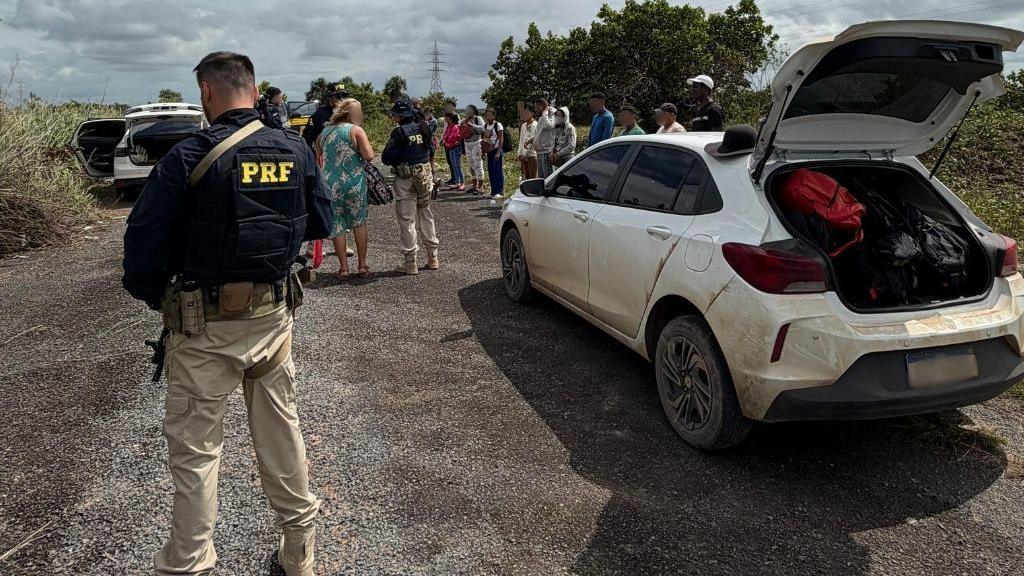
Authorities identified 2,070 victims, the bulk of them women, with 334 arrests for human trafficking itself and 690 arrests linked to secondary offences. In Brazil alone, the Federal Police detected 406 victims—83 Brazilians and 323 foreign nationals—who had been trafficked to Cambodia to be forced into scam operations. The operation also rescued two child victims in Bolivia, who had been forced to work in a grocery store, thanks to Argentine police intervention.
Interpol’s analysis points to a disturbing trend in which Latin American victims are trafficked for forced labour in Europe, with roughly 10% of identified victims being minors who were subjected to sexual exploitation. In addition to arrests, Interpol launched 465 investigations and identified 201 suspects, broadening the scope for future prosecutions.
The operation also saw national agencies launch preventative measures. For example, Colombia’s airport authorities started a campaign warning travelers about fraudulent overseas job offers, while French and Belgian police took down a network that recruited victims via social media.
Interpol Secretary‑General Valdecy Urquiza highlighted that human trafficking remains “one of the most profitable and pervasive forms” of organised crime, generating billions in illicit revenue each year. He praised the cooperation and shared contact between agencies as key to disrupting trans‑national criminal networks and restoring safety to victims, noting that the operation’s results demonstrate what can be achieved when countries unite against the scourge.