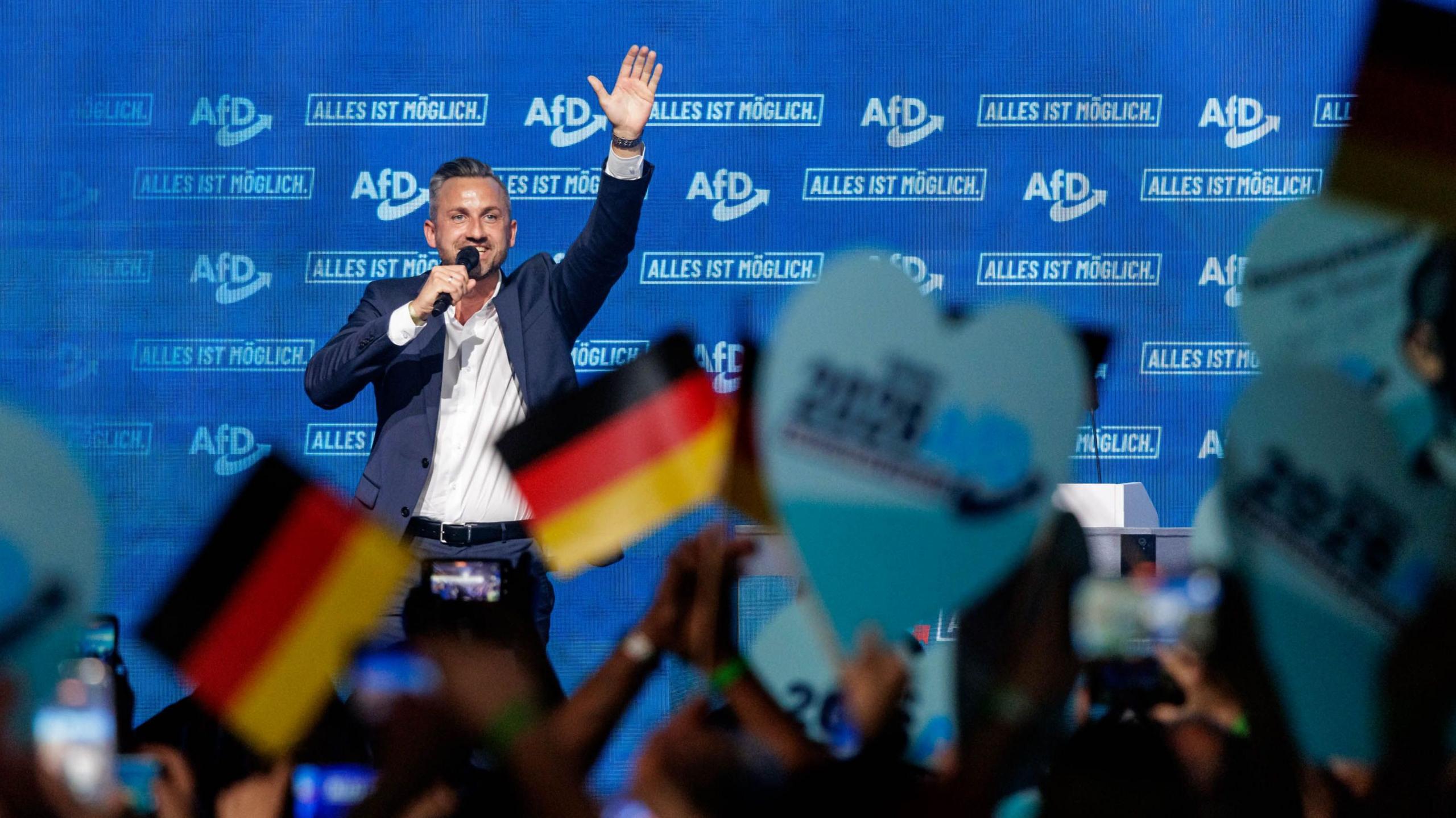
In brief
Germany’s far‑right Alternative für Deutschland (AfD) is aiming for a historic first‑in‑post‑war majority in the Saxony‑Anhalt state election. Ulrich Siegmund, the party’s charismatic lead candidate, has dominated media coverage and traction across eastern German constituencies. The election is seen as a springboard for the AfD’s national ambitions and a test for Chancellor Friedrich Merz, whose popularity wanes amidst economic and immigration disputes. Opponents fear the AfD’s rise could stall democratic safeguards, while supporters claim it speaks to a frustration with mainstream politics.
Germany’s political landscape is turning a new page as the far‑right Alternative für Deutschland (AfD) seeks a majority in the Saxony‑Anhalt state parliament. If successful, the party would become the first far‑right group to hold state‑level power in the post‑war era.
Leading the charge is Ulrich Siegmund, whose populist rhetoric and refusal to be pinned in a “neo‑Nazi” niche have attracted a sizable following. He is being called “Germany’s most dangerous man” by critics, yet supporters see him as a breath of fresh air amid growing discontent over immigration, high energy costs and public safety concerns.
The outcome of this regional vote could shift the balance for Germany’s federal government. Party discussions hint that a potential AfD majority could alter domestic intelligence oversight and open doors to “severing external ties,” further influencing national policy.
Opposition parties have refused to work with the AfD under the “Brandmauer” firewall, forcing the party to secure its own parliamentary majority. With the Saxony‑Anhalt electorate historically leaning towards eastern Germany’s former eastern bloc roots, the electoral stakes are high.
Vice‑versa, the AfD’s push comes amid intense scrutiny: local intelligence agencies have flagged the state’s branch as “purely extremist.” The party’s manifesto promises radical changes such as segregation of refugee children, banning LGBT symbols in schools and tough immigration enforcement.
The election may very well redefine Germany’s political narrative, either heralding a new era of far‑right influence or solidifying a civic safeguard against extremist alignment.