In brief
Israel’s far‑right National Security Minister Itamar Ben‑Gvir, once rejected by the army, now draws a wave of enthusiasm from young voters ahead of next week’s general election. Ninety‑two thousand first‑time voters are expected to head to the polls, with polls indicating that 16% will back far‑right parties and an additional surge of support for center‑right alternatives. The 7 October attacks and a deepening distrust of liberal elites fuel the shift, as Ben‑Gvir’s social‑media savvy reaches a generation that trusts TikTok and Instagram more than mainstream news. While his hard‑line proposals—annexation of the West Bank, settlement of Gaza, and voluntary emigration of Palestinians—provoke strong opposition, the fragmented Israeli electorate places the vote for the future of the nation in the hands of students, university staff and young service members. As the political divide narrows, the outcome hinges on whether the newly mobilised youth can be turned to the new generation of leaders or remain loyal to Ben‑Gvir’s vision.
When Israel’s National Security Minister Itamar Ben‑Gvir turned eighteen, the army turned him away for being “too politically extreme”. Three decades later, he sits in the upper echelons of Benjamin Netanyahu’s coalition while a fresh wave of first‑time voters sways the nation’s political future.
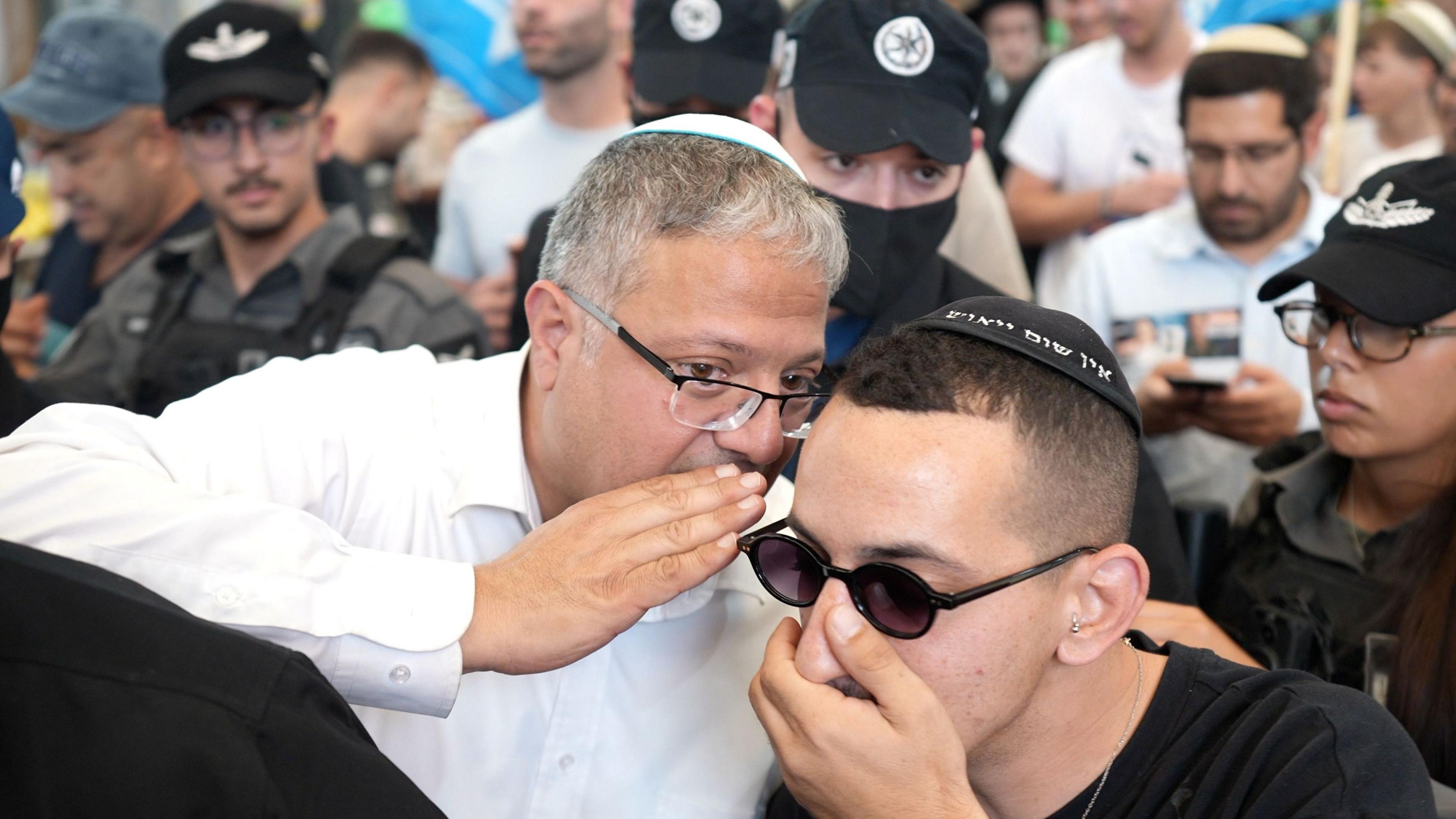
Ben‑Gvir’s campaign trail is peppered with exuberant crowds of teenagers waving massive party flags and chanting his name. In a covered market in Ramle, he urged the young crowd to “get out and vote” and said, “We see the support, we feel the love, and we want to win!” His message is amplified across TikTok and Instagram, platforms he was the first Israeli politician to regularly use in a serious campaign. Youth voters, who prefer these fast‑paced, visual channels to traditional news, find his hardline stance on security resonant.
Polls released by Israel’s largest daily, Yedioth Ahronoth, show that over 16% of the electorate will back far‑right parties next week: Ben‑Gvir’s Jewish Power and his ally’s Religious Zionism party. A separate Channel 12 survey reports that almost 75% of young voters identify as “right or centre‑right”. 80 % of first‑time voters say they plan to cast a ballot, though many question the efficacy of traditional protest methods.
Young Israeli soldiers like Mordechai, 20, claim the 7 October Hamas attacks cemented Ben‑Gvir’s image as a security bulwark: “He gives me a sense of security,” he says. Another 18‑year‑old, Nadav, believes Ben‑Gvir will “protect us when we go to the army.” The same sentiment rings in the words of ultra‑Orthodox Meir Schreiber, 23, recalling how the attacks shaped his political worldview.
The far‑right’s platform extends beyond security. It calls for annexing the West Bank, settling in Gaza, and encouraging voluntary emigration of Palestinians—positions condemned by many liberal Israelis. Both Ben‑Gvir and his ally, Bezalel Smotrich, have faced sanctions and travel bans from Western governments for incitement. Consequently, their presence in a government that has long been dominated by centrist and right‑wing factions is notable.
The divide is felt at the street level. Inside a Ramle market, shopkeepers threw sweets to the passing supporters while others gave wary looks. “Ramle is a mixed city—Jews and Arabs—and he prey on young, uneducated people,” a stallholder cautioned. Yet Ben‑Gvir’s data show a steady rise of support in the 18‑22 age bracket, largely because of the sense of insecurity after 7 October.
Political analyst Dahlia Scheindlin argues that the youth’s hard‑right lean is not merely a reaction to recent trauma. “For the last 20 years, young Israeli Jews have already been more right‑wing than older generations,” she explains, “they’ve been socialised to view annexation and settlement as legitimate tactics.” In the forthcoming election, that demographic shift could be decisive.
Opposition groups are also vying for young voters, using patriotic appeals, social‑media videos, and new candidate profiles. Yonatan Shalev, a 24‑year‑old center‑right candidate, highlights how Ben‑Gvir’s dominance on TikTok forced his peers to broaden their outreach: “The younger people don’t watch the news or read newspapers; they get all their information on TikTok and Instagram.”
Despite the rising support for the far‑right, Israel’s youth remains split. While Ben‑Gvir’s call for a strong, uncompromising state attracts many, a significant minority fears the consequences of extreme nationalism. As the political landscape stays deadlocked between pro‑government coalitions and opposition blocs, the newer generation’s turnout and leanings will determine Israel’s next chapter.
Read more: Israelis demand accountability over 7 October failures three years after attacks