In brief
Elon Musk revealed in a call with analysts that he is actively weighing a merger between Tesla and SpaceX, with special committees already in place to assess the move. Although shareholders’ approval is needed and a deal is not guaranteed, Musk sees significant synergies across AI, satellite, and automotive sectors. The proposed combined valuation of roughly $3.5 trillion would make it one of the world’s largest tech deals. The announcement sent SpaceX shares up 8% after hours and modestly lifted Tesla’s stock. Starlink’s expanding revenue and geopolitical tensions over Ukraine’s access to the network also factor into the debate.
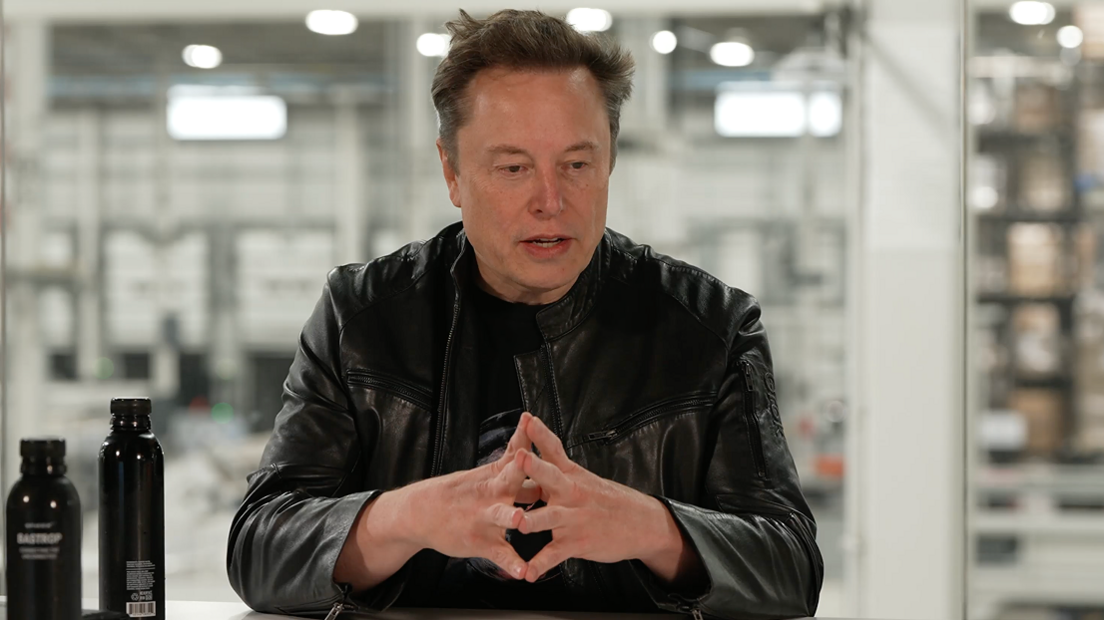
Elon Musk has revealed that he is actively weighing a merger between his two flag‑bearing companies, Tesla and SpaceX, in a call with financial analysts on Tuesday.
He told the analysts, “Do I think it would be a good idea? Yes.” Musk said that while a merger is not guaranteed, he had formed special committees in both organisations to look at the possibility and to negotiate any terms.
“The special committees have not yet reached an agreement on the terms of a transaction and there is no guarantee they will,” he added, but noted that “there is a lot of merit to merging and a lot to be gained.”
With Tesla valued at roughly $1.5 trillion and SpaceX around $2 trillion, any single entity would soon be one of the world’s largest tech conglomerates.
SpaceX produces rockets, runs the Starlink satellite internet constellation and supplies a dedicated satellite network known as Starshield to governments, including the United States. That business has come under scrutiny amid claims that Ukraine’s access to the network has been limited, sparking concern over the country’s vulnerability to Russian strikes.
President Donald Trump has denied any directive to slow Starlink to Ukraine, while Musk suggested that the United States could have been behind the limitations.
Starlink’s quarterly revenue climbed to $5.2 billion in the three months to 30 September, up from $3 billion a year earlier. The company also offers cloud‑compute services for major tech firms such as Anthropic and Google, and generated $7.5 billion in revenue over the same period.
Despite that growth, SpaceX remains unprofitable over the year‑to‑date period, losing $1.1 billion on revenues of $27 billion. But it posted a $4.4 billion profit for the most recent quarter. Following Musk’s remarks, the company’s share price rose 8% in after‑hours trading, while Tesla’s stock gained 2% on the day ahead of its own quarterly report.
Musk himself described the idea of a merger as “tap dancing through a minefield,” acknowledging the many operational, regulatory and shareholder hurdles.
The proposal will ultimately need the approval of a majority of Tesla shareholders, with Musk noting that a 50% threshold for a mega‑merger is “quite a high hurdle to achieve.”
In recent months Musk has moved to tighten the umbrella over his diverse ventures; SpaceX bought xAI and X (formerly Twitter) in a bid to bring AI and social media under one roof, and launched Terafab, a joint chip‑making facility between Tesla and SpaceX that illustrates his view that the companies could work more efficiently together.
Whether a $3.5 trillion mega‑merger will materialise remains to be seen, but the very fact that Musk is taking the discussion seriously could reshape the sector—blending automotive, space, AI and satellite markets into a single powerhouse.