In brief
US envoy Steve Witkoff’s visits to Oslo and St Petersburg have been hailed as a thaw, yet Russia’s insistence on holding talks only in Moscow signals limited progress. Ukrainian President Volodymyr Zelensky’s frustration over the lack of a real breakthrough has been echoed by Kremlin adviser Yuri Ushakov, who called the discussions "unproductive." While Washington remains committed to ending the conflict, the Kremlin’s readiness to resume trilateral talks next month in Abu Dhabi is at a purely technical level. An upcoming meeting in China involving Putin, Trump and Xi may hint at a new generation of great‑power diplomacy, but whether that will translate into substantive peace‑making efforts is still uncertain.
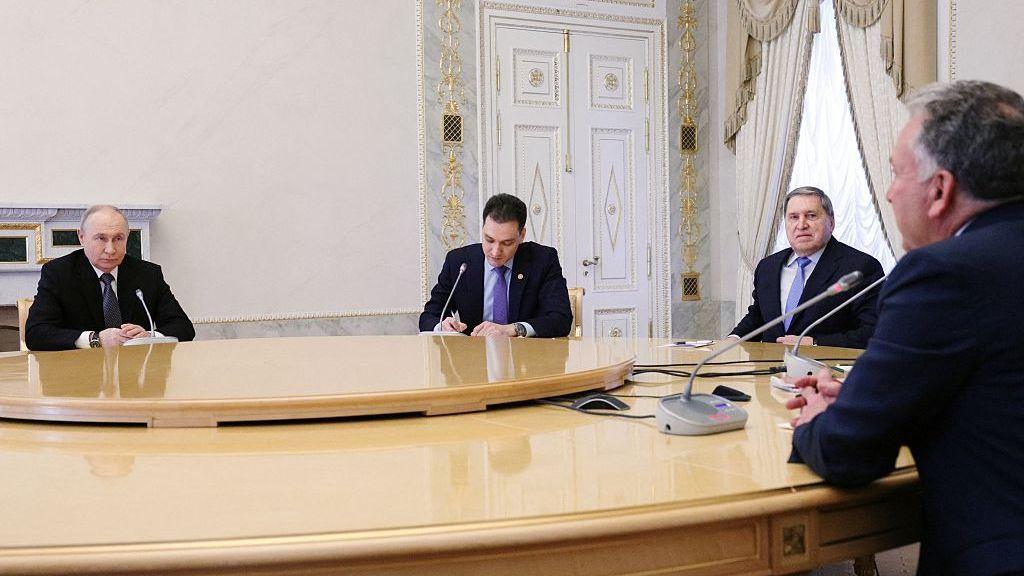
In a week of diplomatic exchanges across Oslo, St Petersburg and the Russian Embassy in Washington, the United States attempted to shape a summit that could bring together President Volodymyr Zelensky, President Donald Trump and Russian President Vladimir Putin. U.S. Special Envoy Steve Witkoff described the Oslo meeting as "good and constructive," citing “new approaches from the Europeans and Kyiv” as a foundation for a broader trilateral dialogue.
But the Kremlin’s stance was unambiguous. Foreign policy aide Yuri Ushakov told Russian state TV that what he had heard from Witkoff “was not much useful” and that, although he was "moving in that direction," the Russian side was far from pressing for a decisive end to hostilities. He further hinted that Moscow’s calculation was that winter would give it an operational advantage, which would shape its strategic posture.
While Putin remains unchallenged by pressure to concede, Washington’s approach—highlighted by Trump’s recent suspension of certain sanctions and a willingness to purchase Russian diesel—has effectively eased the Kremlin’s leverage. Trump’s rhetoric that he is the only Western leader "doing something for peace" has been met with scepticism by Russian commentators who warn that any peace on Moscow’s terms would undermine Ukraine’s sovereignty.
Amid these diplomatic teething problems, analysts are now eyeing the upcoming APEC summit in China for a possible unofficial meeting between Putin, Trump and Xi Jinping. Some dub this convocation "The New Yalta," suggesting a historic shift in global power dynamics. Yet with the Kremlin still largely out of the red‑ink discussions, the prospects for a concrete, immediately actionable settlement remain dim.
The next step is clear: Moscow opens honest negotiations only when the stakes are outweighed by a tangible exterior pressure, a condition unlikely to materialise until the Kremlin's strategies have faltered.