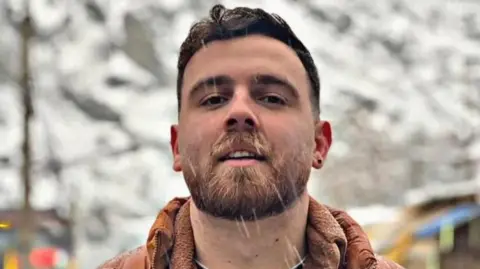
A burly bearded man in a blue tunic moved swiftly through grassy stubble on a windswept road in rural Damascus, collecting bones with his bare hands. He added a jaw to the pile, before gently picking up a skull. Briefly, he kissed it - a moment of tenderness for one of the many victims of Bashar al-Assad. Ten months after Assad was ousted from power last December, in a lightning rebel advance, mass graves are still being uncovered.
The Syrian dictator's legacy is embedded in the soil here - skeletal remains where crops should be. There are now more than 60 grave sites and counting. One of the latest came to light in al-Otaiba village, in the district of Eastern Ghouta, where a shepherd stumbled on clothing and human remains after straw was burnt off. The authorities believe as many as 175 bodies were bulldozed into a mass grave in this former opposition stronghold.
These victims are among the legions of the missing. More than 181,000 people were forcibly disappeared or arbitrarily detained during the 14 years of Syria's civil war, according to the Syrian Network for Human Rights monitoring group. It says 90% were taken by the Assad regime.
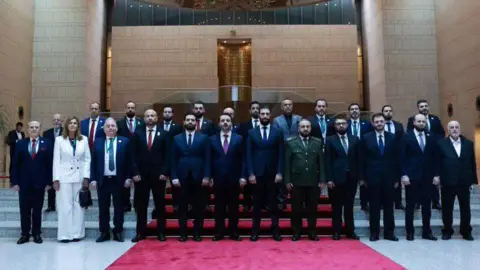
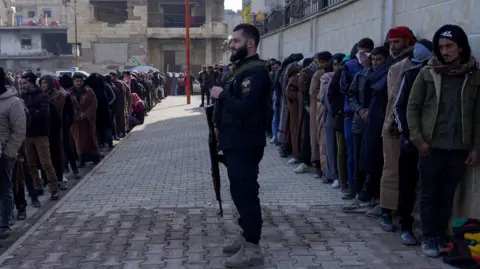
The families of the missing are now demanding answers and justice, from the new Syria – which held its first parliamentary election, of a sort, earlier this month. A 'people's assembly' was chosen but not directly by the people. One-third of the seats remain to be filled. The appointees will be hand-picked by Syria's Interim leader Ahmed al-Sharaa.
As Syria faces forward, President Sharaa - a jihadi fighter turned head of state - says the missing will remain 'a national priority'. Bereaved relatives like Kasim Hamami are counting on that. He digs beside the roadside at the mass grave site, pulling secrets from the soil.
Kasim uncovered a frayed, brownish jumper covered in dirt, the last trace of his brother Samer, who disappeared aged 21. Samer was a civilian... newly-wed, just 15 days into his marriage. He had nothing to do with armed groups. He didn't fight anybody, said Kasim.
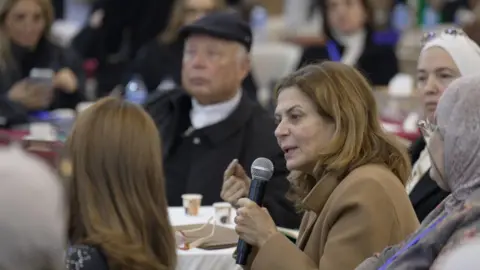
As families gather in community-led forums dubbed 'Truth Tents', they share harrowing stories, pieces of their anguish, hoping for accountability. A woman at the gathering declared, We will get our rights when he is hanged.
The ranks of the missing continue to grow, and the National Commission for Missing Persons is struggling with limited resources including DNA testing facilities. In this shadowed aftermath of Assad's rule, families face years of uncertainty and waiting for justice, truth, or bones to bury.