In brief
The Bundibugyo species of Ebola claims lives in the heart of the Democratic Republic of Congo’s Ituri province, with almost 200 deaths so far. In Bunia’s Nyamurongo cemetery, mourners such as Joel Lonza Makumbu bury parents back‑to‑back, while WHO anthropologists and IFRC volunteers negotiate culturally sensitive yet lethal‑proof burial protocols. Rather than elaborate rites, homesickness turns into urgent medical precautions as bodies are sealed in leak‑proof bags, placed in coffins with transparent panels, and buried within minutes. The community’s fear and the fight against misinformation highlight a fragile line between tradition and survival in an outbreak that has already emptied households of multiple generations.
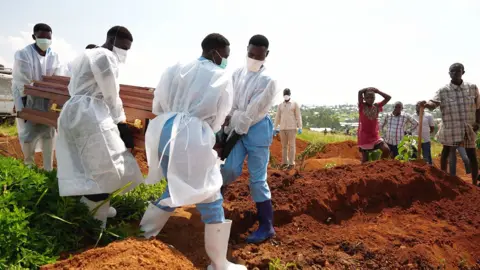
The Nyamurongo cemetery in Bunia, the capital of the eastern Congo’s Ituri province, is far busier than usual. Families line up less as crowds, singing and dancing as they once did, and more as a queue of mourners ready to plant bodies into the earth.
"Today is the sixth time I have come to the cemetery," Joel Lonza Makumbu says, eyes wet as he reaches the freshly dug pit. Yesterday he buried his father, today he is pressing his hands over his mother’s coffin. He has also lost three sisters and a brother‑in‑law.
The death has not lost him hope: he keeps telling the overwhelmed crowds, "Ebola is true," refusing to let the virus become a moral‑mistruth.
Bundibugyo Ebola is particularly relentless; it can kill a quarter of those infected and is passed through contact with the victim’s blood, urine, vomit, semen or breast milk. Because of this, safe burial procedures are essential. Bodies that died from the disease are buried in leak‑proof bags, sealed immediately, and then placed in coffins that allow family members to see the inside through a thin transparent panel.
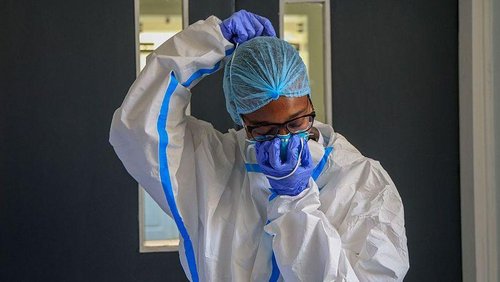
The International Federation of the Red Cross and Red Crescent (IFRC) volunteers, armed in full personal protective equipment, make the trip from the hospital’s temporary morgue escort. They disinfect the path, seal the body bag, lift the coffin and drive it to the burial site, all while the grieving mother and brother‑in‑law watch from a distance.
Speaking to a local WHO anthropologist, Dr. Julienne Anoko explains that in most Ituri communities where a body is buried in smart clothes, the dead is believed to "travel from one world to another." For those who died of Ebola, the body is not clothed in traditional garb but immediately removed from the risk of fluid contact and temporarily placed in a safe bag before burial.
The community’s customs fall into conflict with safety protocols, particularly when a pregnant woman dies. Traditionally, an unborn child is carried ashore so the mother can "travel light" into the afterlife. The IFRC and WHO advise families to either bury the foetus separately or together in a single skull‑cap, despite the heightened risk of fluid contact.
Dr. Anoko states that negotiating these protocols with the community takes time: "In some cases, it will take three days for families to accept. In other cases, we can convince them in a few hours. We use cultural knowledge to ease the process," she says.
The operation has a psychological core. Joel’s son, who sits on the roadside with his mother’s funeral dominance, experiences the funeral as a small moment of grief, to balance the weight of looming deaths in the family. He has relatives both in the treatment centers of Rwampara and other facilities; he speaks of his fear, but also of his determination to educate the community that Ebola is real.
The story of the 34‑year‑old mother of four, buried in a clearing inside a coffin wrapped in a clear film bag, is pulled out by IFRC volunteers who do a quick clean and hand it over to the gravediggers, who complete the burial in less than ten minutes. In that time, the mourners can say goodbye to a bear‑like presence, as the disease continues to sap households from the region.
In an area where almost 200 deaths have been reported and yet the virus continues to spread, the cooperation between WHO experts, local anthropologists, IFRC volunteers and grieving families changes the grounds of the cemetery into a resilient front line for the fight against the virus.