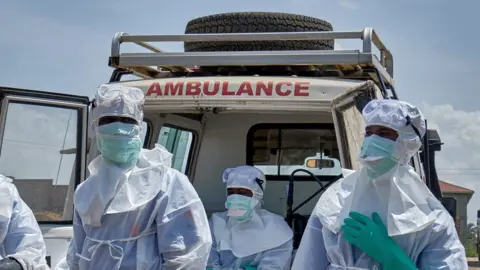
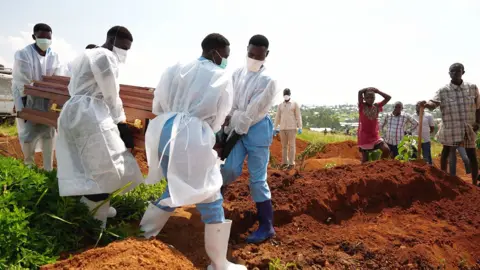
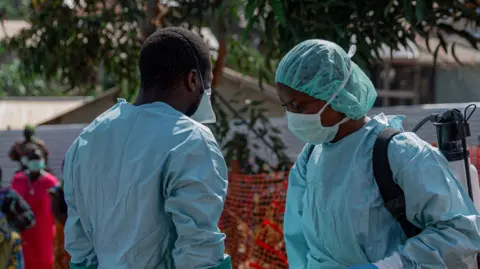
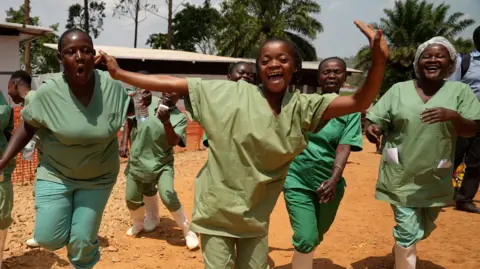
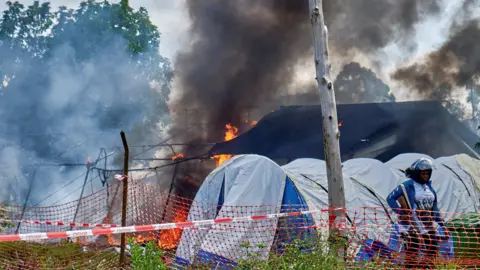
In a shocking escalation of violence during the Ebola outbreak, a mob of residents stormed Rwampara General Hospital in eastern DR Congo’s Ituri Province, igniting tents used as isolation wards and hurling stones at medical staff. The riot erupted after family members of a 28-year-old footballer—widely believed to have died from Ebola—were denied access to his body for burial. 'They started throwing projectiles at the hospital. They even set fire to tents that were being used as isolation wards,' local politician Luc Malembe Malembe told Reuters. Police fired warning shots to disperse the crowd, while medical workers were placed under military protection. A healthcare worker sustained injuries from stones during the chaos. The incident underscores a critical public health crisis: authorities struggle to enforce safe burial protocols for Ebola victims, despite the WHO’s urgent recommendations. 'People are not properly informed... For certain segments of the population, especially in remote areas, Ebola is an invention by outsiders—it does not exist,' Malembe explained. This distrust is compounded by misinformation. The deceased footballer’s mother told Reuters she believed her son died of typhoid fever, not Ebola. In the aftermath, six patients who were receiving care in the burned tents were reported missing. While Alima, a medical charity running the facility, confirmed they 'are currently being cared for at the hospital,' the incident reveals systemic failures in community engagement. The outbreak, caused by the Bundibugyo strain (with no available vaccine), has claimed at least 139 lives out of 600 suspected cases. But the crisis worsens as the virus spills across borders: Uganda confirmed two cases, prompting transport restrictions, and the M23 rebel group announced its first South Kivu infection. The WHO warns containment is 'hindered by community resistance and limited access to conflict zones,' while Congolese authorities report 159 deaths—higher than the global tally. With a potential vaccine still nine months away, experts fear the outbreak could spiral further without trust-building efforts. 'We’re fighting a virus and a misconception,' said Jean Claude Mukendi, coordinating security for Ebola response. As Kinshasa’s national football team cancels pre-World Cup training due to the crisis, the world watches as one of Africa’s oldest health emergencies threatens to become uncontrollable.}
Ebola Crisis Deepens: Congo Hospital Tents Burned as Distrust Fuels Outbreak
Ebola Crisis Deepens: Congo Hospital Tents Burned as Distrust Fuels Outbreak
In eastern DR Congo, an angry mob torched Ebola isolation tents at Rwampara General Hospital after families were denied burial rights for a suspected Ebola victim. The incident reveals deep distrust in authorities, with locals believing Ebola is 'an invention by outsiders' despite 139 confirmed deaths. With outbreaks spreading to Uganda and M23-controlled regions, health officials warn the Bundibugyo strain—lacking a vaccine—threatens to overwhelm fragile containment efforts.
Residents of DR Congo's Ituri province set fire to Ebola isolation tents at Rwampara Hospital after being blocked from burying a young footballer suspected of dying from Ebola. Authorities face mounting distrust as misinformation fuels unrest, while the outbreak spreads to Uganda and rebel-held territories. With no vaccine available for the Bundibugyo strain, WHO declares the situation a 'public health emergency,' highlighting the deadly cycle of fear and inadequate response in conflict-ridden regions.