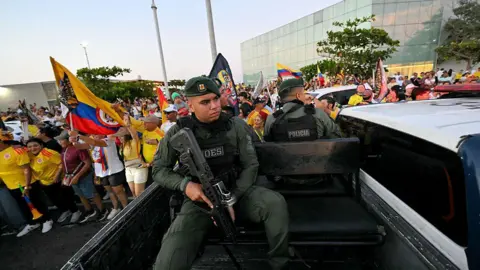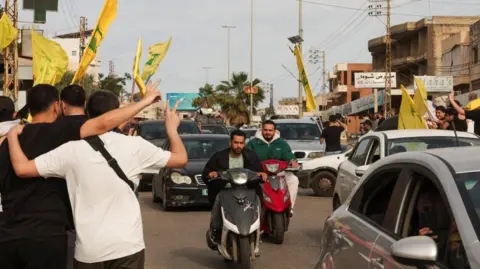
At the stroke of midnight, gunfire and fireworks celebrated the start of the ceasefire in Beirut. Throughout the morning, smiling crowds gathered along roads leading to Lebanon's south, the heartland of Hezbollah, playing revolutionary music and waving the group's yellow flag as they started their journey back to where they had been forced from by the war.
This is, initially, a 10-day ceasefire after six weeks of a devastating conflict between Israel and Hezbollah, the Lebanese Shia Muslim militia and political party. But it brings some respite for a country exhausted by the war.
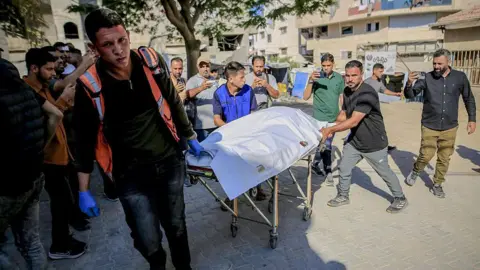
More than 2,100 people have been killed, Lebanese health authorities say, and over a million, or roughly one in five of the population, have been displaced - creating a pressing humanitarian crisis.
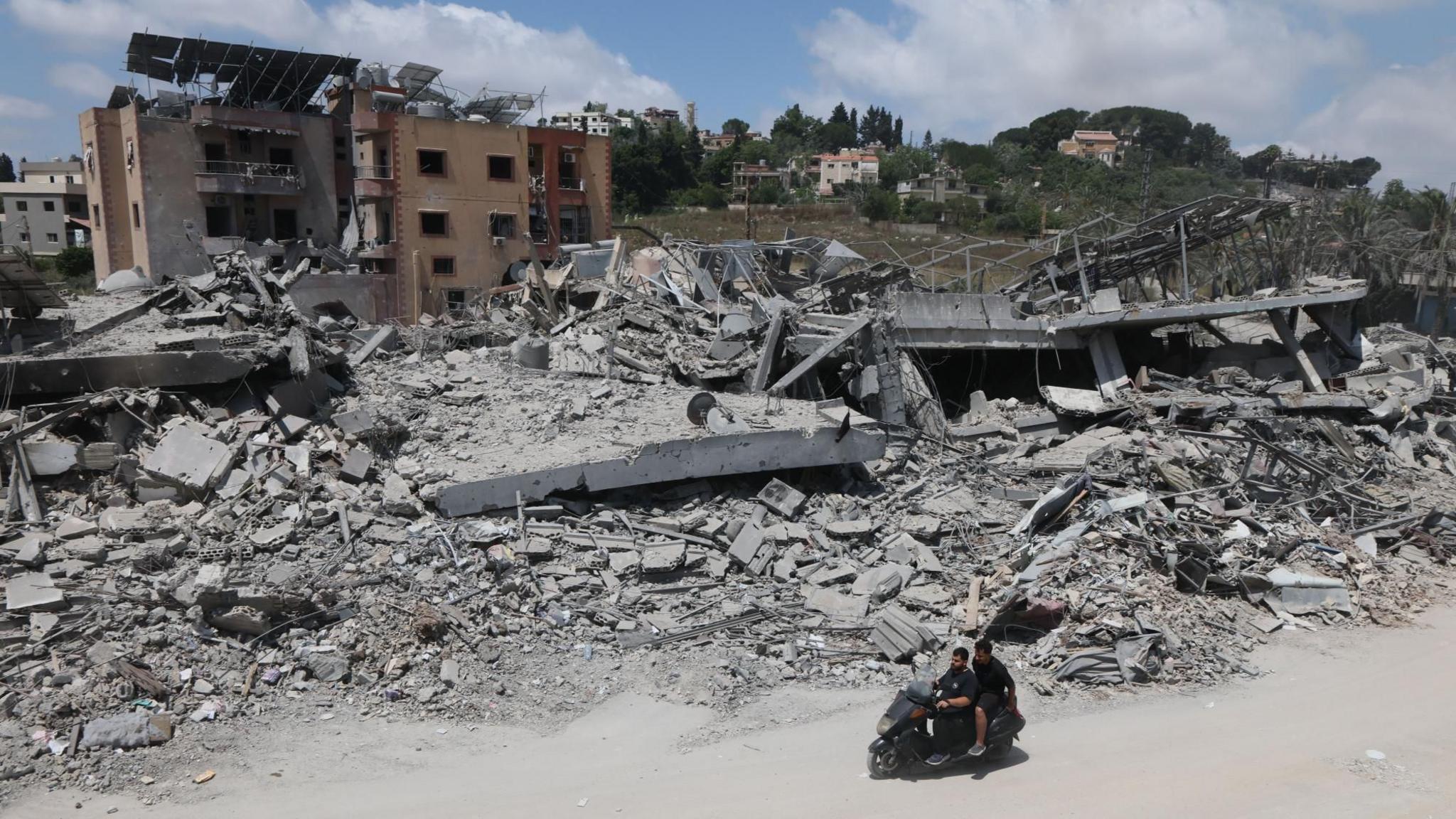
Mattresses on top of cars and families on motorbikes indicated that people were on the move - but many are not returning to stay. In some places, the damage is too extensive and for some there is nothing to go back to at all. Some towns and villages near the border remain under Israeli occupation.
But in the Hezbollah-controlled southern suburbs of Beirut, known as Dahieh, the streets remained relatively quiet. The area has been hammered by Israel during the war, and many residential buildings have been reduced to rubble.
In the city's waterfront, where hundreds of displaced families have been living in improvised tents, some said they feared returning.
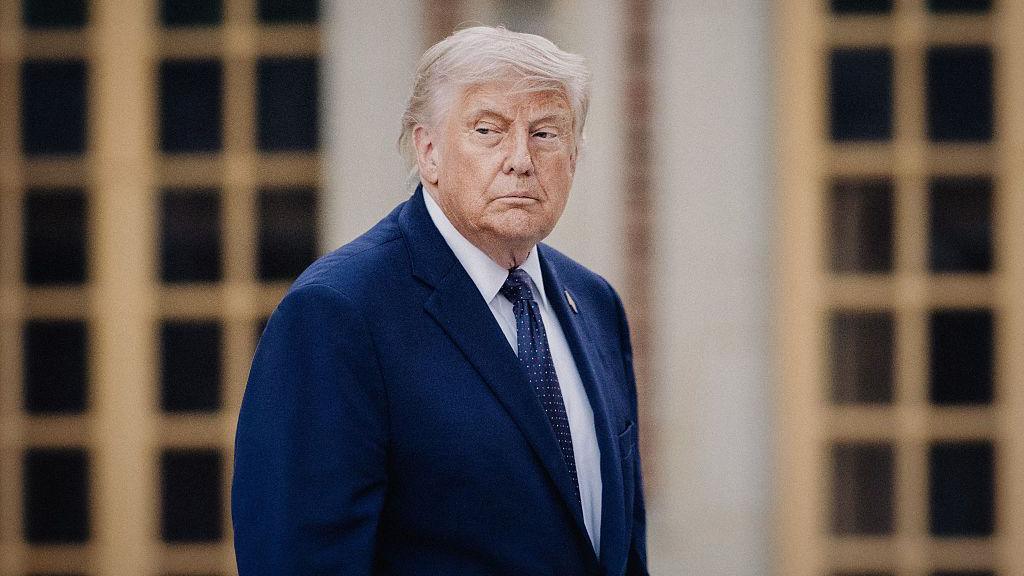
Announced by US President Donald Trump, the ceasefire leaves open questions. It does not mention the withdrawal of Israeli troops from southern Lebanon, raising fears of continued occupation even after the war. Moreover, the issue of Hezbollah's weapons remains unresolved, dividing the nation.
Wafiq Safa, a high-ranking member of Hezbollah's political council, stated the group would never, ever disarm, highlighting its close ties to Iran. The Lebanese government, having little control over Hezbollah, has acknowledged that disarmament would not come without negotiations, potentially leading to further conflict given Iran's influential role.
While Trump hopes this ceasefire could lead to normalization between Israel and Lebanon, the longstanding state of war and current realities suggest that substantial progress remains unlikely.