In the 11th century, while Europe struggled with its own upheavals, a remarkable transformation was taking place across southern India under the Chola dynasty, particularly during the reign of King Rajaraja Chola. Known for erecting the awe-inspiring Brihadishvara temple—a UNESCO World Heritage site that stands 216ft tall—Rajaraja's reign defined an era of architectural grandeur, cultural richness, and strategic economic foresight.
Constructed between 1000–1010 CE with 130,000 tonnes of granite, the Brihadishvara was adorned with an emblem of the Hindu god Shiva, lavishly detailed and gleaming with precious gemstones. Accompanying the temple were bronzes and treasures from conquests in neighboring territories, marking Rajaraja as an exceptionally wealthy ruler of his time.
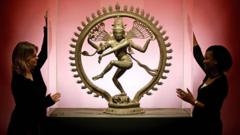
Initially a power among various factions in the Kaveri floodplain, the Cholas distinguished themselves through innovation and effective governance. Women in the dynasty, like Sembiyan Mahadevi, played crucial roles in promoting Chola identity and devotion to Shiva, which facilitated a religious renaissance that popularized the Nataraja, a form of Shiva symbolizing dance and movement.
Rajaraja Chola emphasized military conquest, expanding the Chola sphere of influence far beyond traditional borders. He became the first mainland Indian king to establish a foothold in Sri Lanka and launched campaigns in the rugged Deccan Plateau, amassing wealth that funded public welfare and irrigation projects, propelling the region’s agricultural productivity to new heights.
Following Rajaraja, his son Rajendra further advanced these ambitions, forging beneficial partnerships with Tamil merchant corporations and illustrating the connection between political power and commerce—a setup that foreshadowed the future impacts of colonial trading companies.
Rajarendra’s naval expeditions, particularly his sacking of the Malay city of Kedah in 1026, expanded the Chola network and fostered the rising Tamil diaspora in Southeast Asia, where Indian merchants thrived in newly established trade connections and even erected temples devoted to their gods.
As a cultural hub, Chola territories became a melting pot of influences, attracting merchants, diplomats, and adventurers from varied backgrounds—Bengali, Chinese, and Tunisian—creating vibrant communities that thrived long into the later centuries. This era saw Tamil poetry flourish alongside advances in metallurgy and artistry, producing legendary bronzes now celebrated globally in museums.
The Cholas not only orchestrated monumental architectural feats but also engaged in rich cultural exchanges and economic innovations that resonated throughout Asia and beyond, marking their legacy as one of the most influential dynasties within the medieval world’s tapestry.
Anirudh Kanisetti captures the essence of this historical narrative in his work "Lords of Earth And Sea: A History of The Chola Empire," highlighting the extraordinary journey of a dynasty that, despite its historical significance, remains underappreciated globally.
Constructed between 1000–1010 CE with 130,000 tonnes of granite, the Brihadishvara was adorned with an emblem of the Hindu god Shiva, lavishly detailed and gleaming with precious gemstones. Accompanying the temple were bronzes and treasures from conquests in neighboring territories, marking Rajaraja as an exceptionally wealthy ruler of his time.
Initially a power among various factions in the Kaveri floodplain, the Cholas distinguished themselves through innovation and effective governance. Women in the dynasty, like Sembiyan Mahadevi, played crucial roles in promoting Chola identity and devotion to Shiva, which facilitated a religious renaissance that popularized the Nataraja, a form of Shiva symbolizing dance and movement.
Rajaraja Chola emphasized military conquest, expanding the Chola sphere of influence far beyond traditional borders. He became the first mainland Indian king to establish a foothold in Sri Lanka and launched campaigns in the rugged Deccan Plateau, amassing wealth that funded public welfare and irrigation projects, propelling the region’s agricultural productivity to new heights.
Following Rajaraja, his son Rajendra further advanced these ambitions, forging beneficial partnerships with Tamil merchant corporations and illustrating the connection between political power and commerce—a setup that foreshadowed the future impacts of colonial trading companies.
Rajarendra’s naval expeditions, particularly his sacking of the Malay city of Kedah in 1026, expanded the Chola network and fostered the rising Tamil diaspora in Southeast Asia, where Indian merchants thrived in newly established trade connections and even erected temples devoted to their gods.
As a cultural hub, Chola territories became a melting pot of influences, attracting merchants, diplomats, and adventurers from varied backgrounds—Bengali, Chinese, and Tunisian—creating vibrant communities that thrived long into the later centuries. This era saw Tamil poetry flourish alongside advances in metallurgy and artistry, producing legendary bronzes now celebrated globally in museums.
The Cholas not only orchestrated monumental architectural feats but also engaged in rich cultural exchanges and economic innovations that resonated throughout Asia and beyond, marking their legacy as one of the most influential dynasties within the medieval world’s tapestry.
Anirudh Kanisetti captures the essence of this historical narrative in his work "Lords of Earth And Sea: A History of The Chola Empire," highlighting the extraordinary journey of a dynasty that, despite its historical significance, remains underappreciated globally.