In brief
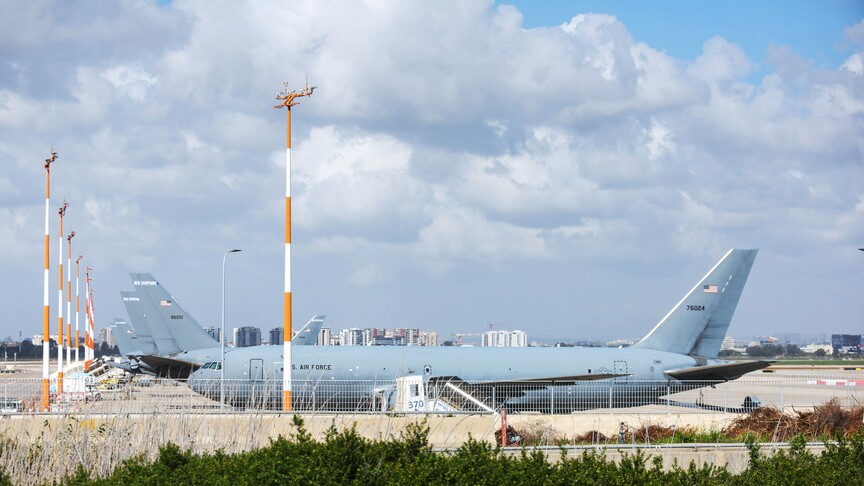
Multiple U.S. Air Force C‑17 cargo flights from Texas to Israel are underway, boosting signs that a full Patriot battery, not just a minimal engagement package, could be moving into the region. The airlift follows a pattern of broader fleet repositioning across the Middle East and Europe and adds to growing speculation about U.S. air‑defense commitments amid regional tensions. Flight‑tracking data also reveal other movement operations such as a U.S. C‑17 ferrying equipment to Canada and troop‑moving sorties across the Gulf.
Open‑source tracking of military cargo aircraft in the early hours of Tuesday, 3 November, shows a new wave of U.S. Air Force C‑17A Globemaster III planes taking off from Biggs Army Airfield at Fort Bliss, Texas, bound for Ovda Air Base in southern Israel. This activity comes on the back of eight flights that arrived last week, and it raises the total number of flights from Biggs to Ovda to a projected 16, according to analysts monitoring aviation data streams. At least six C‑17s of the second wave are carrying air‑defense equipment, a fact that “suggests Washington may be preparing to deploy an additional Patriot battery,” the Anadolu Agency report noted.
The Patriot system is a mobile air‑defence system, and data from flight‑tracking sources indicate the possibility of a complete battery being shipped rather than a minimal engagement package (MEP). An MEP can conduct air and missile defence operations anywhere in the CENTCOM area of responsibility in a maximum of 96 hours, whereas a full battery would provide a more robust and sustained presence in the region. The scale of the 16-planned cargo flights, each powered by the large C‑17A aircraft, points to the movement of a large armament suite rather than a handful of components.
In addition to the flights to Israel, the same tracking frames recorded other U.S. military movements across the Middle East and Europe. C‑17 aircraft that had been stationed at Al Udeid Air Base in Qatar at the beginning of the war departed on 1 November for Ramstein and Spangdahlem air bases in Germany. Another C‑17 flew on Tuesday from Pope Army Airfield in North Carolina to Ali Al Salem Air Base in Kuwait, while two aircraft left the Kuwaiti base for Davis‑Mothan Air Force Base in Arizona. These movements, according to the agency, fit into a broader pattern of U.S. fleet repositioning between U.S. land forces and air bases throughout the region and the European theatre.
Earlier this week, a separate patrol of the C‑17 operations at Biggs Army Airfield involved an aircraft operating under the call sign REACH 324, which departed on Monday for Gander International Airport in Canada. This flight was separate from the eight flights that had already reached Israel, suggesting that additional Patriot systems could be in the works for further deployment in the region.
The United States has pulled support equipment from RAF Fairford, in the United Kingdom, as part of the same spatial reallocation. Two C‑17s left RAF Fairford in a 48‑hour period; one headed to Ellsworth Air Force Base in South Dakota while the other flew to C‑17 aircraft at another location. The withdrawal from the UK, tracked over the span of two days, adds another dimension to the logistics puzzle behind the theater’s supporting assets.
Implications for Regional Security Dynamics
While analysts observe these movements in real time, the broader strategic consequences are still being examined. A full Patriot battery on Israeli soil would enhance the air‑defence capabilities of a key U.S. ally, potentially serving as a deterrent to hostile missile or aircraft threats. The United States, which has already performed numerous 8‑flight missions to facilitate rapid equipment delivery to the region, has employed the C‑17 fleet as a key enabler for force mobility. The current operation of 16 flights is unprecedented in scale, according to the open‑source tracking data. Whether the deployment will materialise in a sweep of tangible effects on the ground will likely unfold over the coming days.
Specialized military observers have also endeavored to parse the logistics involved in a full battery shipment. The data show that cargo flights, each with a capacity to hold multiple vehicle and system components, have been staged in successive groups. The decision to separate the Canada flight from the eight shipments to Israel suggests that the U.S. Air Force is managing a complex inventory of air‑defence units across a large geographic spread. Analysts point out that the movement of polar‑island and arctic departure routes for the same aircraft may signal a logistics strategy that takes into account seasonal and environmental factors that influence the popup of such strategic assets to the Middle East.
By bringing these assets to Ovda Air Base, the United States will effectively widen its strategic reach. The speed of deployment would allow for a rapid response time in a tense environment and could also guarantee an escalation‑ready posture by reinforcing Israel’s existing air‑defence chain of command. In the eyes of industry experts and regional alliances, this repositioning might inspire new supply‑chain and aerial‑defence arrangements with other allies in the area.
Meanwhile, the ongoing conversation about the number of flights required for a full battery is still in flux. Ry select answers on the logistics of the Patriot system were not publicly disclosed, but the open‑source intelligence demonstrates that even a single flight can provide a substantial number of air‑defence pieces. The length of the flights (several sequential trips between Texas and southern Israel) signals the potential for a larger, logistics‑heavy mission that may encompass the entire battery, instead of a smaller, streamlined set of components that would take less time to assemble.
In conclusion, the seven nonstop C‑17 flights taking off from Texas and the additional flights tracked across the region underscore a large‑scale re‑allocation of Army and Air Force assets at a time of rising tensions. While the logistics chain appears well inside the current parameters of U.S. mobility doctrine, the specific outcomes of the air‑lift – whether a full battery actually arrives or a smaller component baseline moves forward – remain unconfirmed. The flight data points to potential shifts in the post‑war posture of the U.S. and among Israel’s allies, but exact timings and component numbers are still estimates. The impact of the air‑lift may only be fully understood as the aircraft enter forward positions and operational commanders confirm the integrity of the assembled systems. Overall, the current evidence suggests an Eve of stronger, more comprehensive air‑defence arrangements as U.S. forces recalibrate their strategic presence across the United States and its allies in the Middle East and Europe. The situation is unfolding as the broader reality of power and stability in the region is reshaped by logistical maneuvers and real‑time capabilities."