In brief
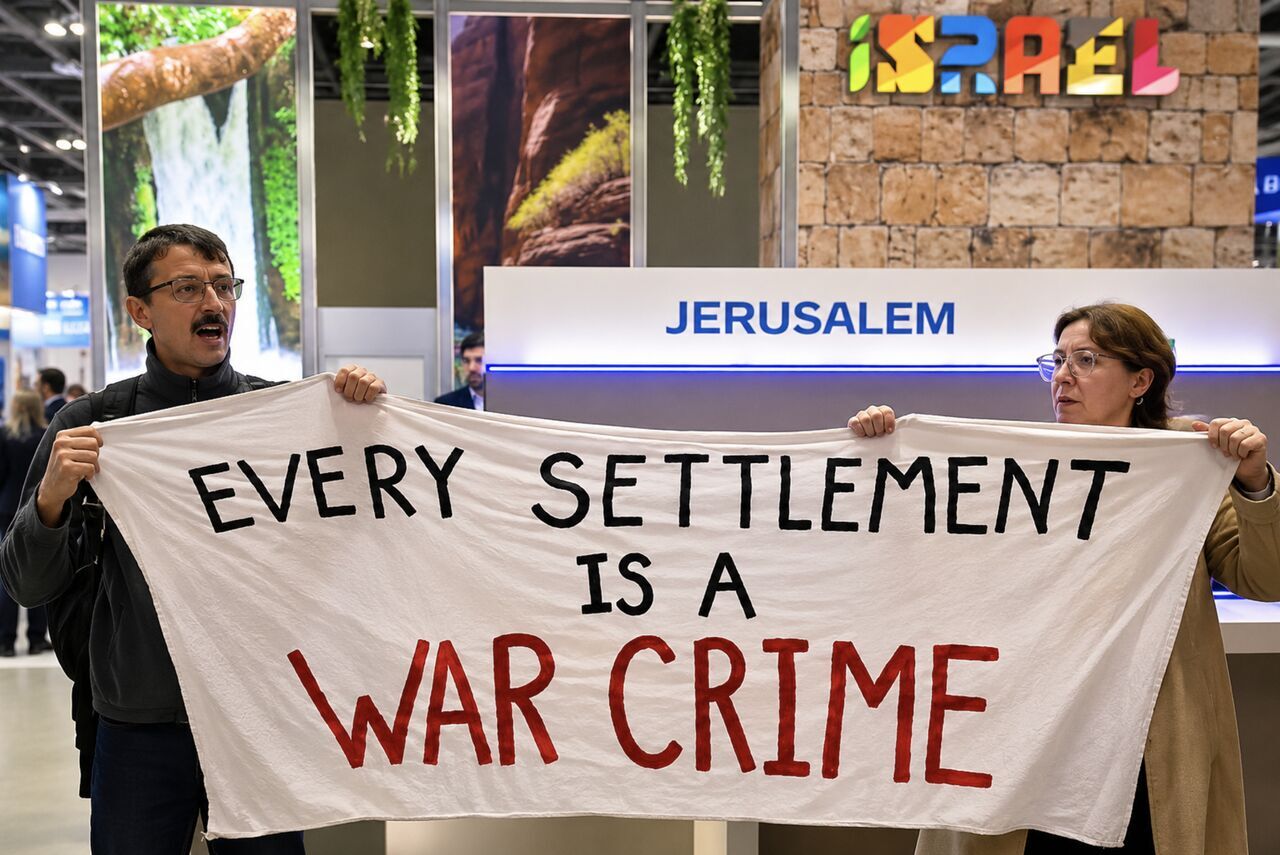
At the World Travel Market in London, the Palestine Solidarity Campaign staged a protest outside the Israeli pavilion, accusing it of advertising tourism in illegally occupied Palestinian territories. They called on Foreign Secretary Ed Miliband to reaffirm his pledge to ban such promotion. The event highlights ongoing tensions over Israel’s settlement activities and the UK’s diplomatic stance.
The Palestine Solidarity Campaign held a protest in front of the Israeli pavilion at the World Travel Market in London on Tuesday, accusing the Zionist regime’s exhibits of promoting tourism in illegally occupied Palestinian territories. The demonstration, organised by the campaign, targeted the Israeli pavilion on the grounds that it was in conflict with promises made by the British government to ban the promotion of illegal settlements within the UK. The activists demanded that Foreign Secretary Ed Miliband clarify whether he will continue to uphold that commitment.
Background of the Protest
The World Travel Market is a multi‑disciplinary trade fair that attracts hotels, airlines, travel agencies and tourism boards from around the world. In 2026, the event hosted an Israeli tourism pavilion that showcased destinations in areas such as the West Bank and East Jerusalem. According to the Palestine Solidarity Campaign, the pavilion’s marketing material highlighted sites located in settlements that the international community and the United Nations consider illegal under international law.
Britain’s stance on Israeli settlements has long been contested. In the past, the UK had announced a policy to distance itself from promotional activities that support the development of settlements. The campaign’s message to Miliband reminds him that he had earlier vowed to enforce a ban on the promotion of settlements, and he must now adhere to that pledge. This claim was assembled from statements by the campaign members, who argued that the British government has been inconsistent in its enforcement of policies related to the Israeli‑Palestinian conflict.
Stance of the Palestine Solidarity Campaign
The campaign is a British organisation that campaigns against what it calls the brutal crimes of the Zionist regime. By holding a public demonstration, it aimed to bring international attention to the situation in the occupied territories and to press the UK government to keep its promise. The activists warned that unregulated promotion of tourism in settlements could be seen as a form of complicity in the occupation, and they urged the foreign office to adopt concrete measures to prevent such activities.
Reactions from the British Political Sphere
While the demonstration took place, several UK MPs expressed concern over the conflicting messages of the government’s trade policy and human rights standards. Parliamentary debates have noted that global tourism trade shows continue to feature Israeli delegations, and some have criticised the lack of clarity regarding the ban on settlement promotions. The stance of the Foreign Office remains unclear, with no immediate response recorded from Miliband following the protest.
Questions That Remain Open
About whether Britain will effectively enforce the ban on settlement promotion, what specific legal mechanisms will be used, and how the UK will balance its commercial relationships with Israel, the protest raised key questions. The campaign argued that the promise of a ban must be actionable and observable, rather than verbal. The broader issues of whether promoting tourism in occupied territories constitutes a violation of United Nations resolutions also remain unresolved in the public debate.
In addition, activists questioned how other Nations Participation at the World Travel Market might impact the enforcement of international law. With countries from around the world showcasing their tourism packages in the event, the risks of endorsing or normalising settlement tourism were underscored by the protesters. The call to the Foreign Secretary therefore pointed to a need for stronger diplomatic pressure and clearer communication that the UK will not be used as a conduit for settlement support.
Conclusion
The protest at the World Travel Market reflects ongoing international friction over settlement activity and the role of tourism in legitimising it. The focus on a pledge by the UK to ban settlement promotion underscores the tension between commerce and human rights policies. As the debate continues, the response from the Foreign Office and the broader UK government will be crucial to determine whether their promises translate into enforceable practice at international trade events such as the World Travel Market.