
In brief
An ex‑Israeli army spokesperson, Ayelet Kroizer, announced that Israel’s military propaganda unit routinely misrepresented facts about Gaza and the West Bank, calling innocent Palestinians “terrorists” to shape public perception. She revealed the internal strategy aimed at boosting domestic confidence and securing international legitimacy, and she has joined the NGO Breaking the Silence to expose such abuses. The claim raises questions about the army’s information practices and the broader narrative control of the conflict.
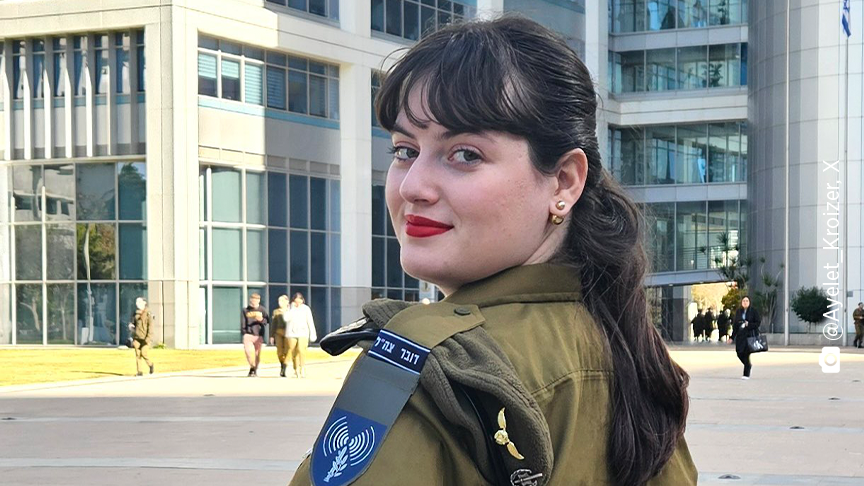
On Monday, Ayelet Kroizer, a former member of Israel’s army spokesperson unit, accused the military of deliberately twisting the truth about Gaza and the occupied West Bank to rally domestic support and extend international legitimacy for its operations.
Kroizer, who has no prior public profile beyond a brief military service in the 2020s, announced her role as spokesperson for the Israeli NGO Breaking the Silence and used the post to expose how her unit “manipulated the details released to the media,” according to the Anadolu Agency.
She said the army’s public‑relations tactics often involved labeling innocent Palestinians as “terrorists” and tailoring statements to the audience and desired outcome. For Israelis, she claimed the goal was to strengthen public confidence; for foreigners, it was to broaden legitimacy for military actions abroad.
Ayelet Kroizer
"During my service, I manipulated the details released to the media. I saw how the word ‘terrorist’ was attached even to innocent Palestinians and how statements were tailored to the target audience and the objective set for it," she wrote.
Kroizer’s remarks highlight an alleged systematic procedure: after reporting mass casualties, the army’s unit typically added expressions of regret for “unintended harm” to outsiders, a routine she described. She noted her personal experience, stating, "I learned how to report dozens of deaths in a single strike and automatically add that we regret any harm to uninvolved people. That was the routine of my service," the Anadolu piece records.
Describing her military background, Kroizer said she grew up in an ultra‑Orthodox community and voluntarily waived her exemption to enlist during the Gaza war. She added that she never imagined, after completing her service, joining Breaking the Silence instead of pursuing further education or travel.
Background
Breaking the Silence is an Israeli NGO that publishes testimonies of former soldiers to shed light on alleged abuses in the occupied Palestinian territories. The organization has produced a number of reports suggesting that military narratives can be exaggerated or distorted to maintain certain public sentiments.
The Anadolu Agency article frames Kroizer’s accusations within a broader context: that the army’s spokesperson unit acted “like a public relations agency” rather than an institution accountable to the public. The reporting, focused on the 2020s conflict, suggests the unit’s central objective was to boost “public confidence in the army” while subordinating the public’s right to know.
Open Questions
The claim raises several open questions for analysts and observers. First, what internal controls does the Israeli military have to vet statements released to media outlets? The Anadolu report does not provide details on the chain of approval or the extent to which independent fact‑checking occurs within the unit.
Second, how does the army’s narrative strategy differ between domestic and international audiences? Kroizer’s account indicates a deliberate shift, but the mechanics of tailoring content for each demographic remain unclear.
Third, what impact does this alleged distortion have on the broader information environment in the region, especially given the prevalence of social‑media messaging? While the article highlights her own experience, it does not address systematic patterns across the army’s communication apparatus or how other soldiers might corroborate or dispute these practices.
Finally, the reaction from Israeli officials, the army, or government representatives remains unreported. The Anadolu Agency piece does not include any statements from the ministry of defense or the spokesperson’s office, leaving the official stance on Kroizer’s allegations unknown.
As the story develops, observers will likely scrutinize both the internal mechanisms of military communication and the broader sociopolitical impact of framing violence within the Gaza conflict and the West Bank.

