In brief
A Russian air strike on a school used as a humanitarian centre in Komyshuvakha killed 24 people and injured five. Ukrainian officials condemned the attack as proof that Russia has no interest in de‑escalating the war. The strike followed a repeat bombing and comes amid other Russian attacks across Ukraine.
A Russian air strike on Sunday night devastated a humanitarian centre in Komyshuvakha, a village in Ukraine’s southeastern Zaporizhia region, killing 24 people and leaving five wounded, Ukrainian emergency services said. The strike struck a school that had been converted into a shelter for aid workers, rescuers, and residents.
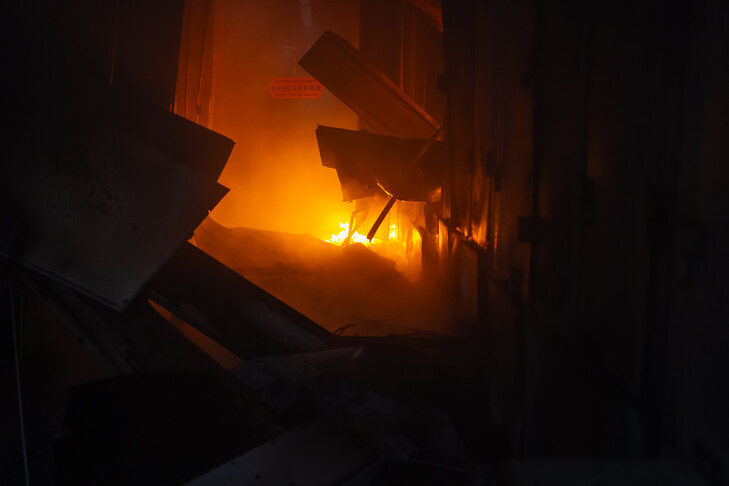
The emergency services released footage that showed the building reduced to piles of smouldering rubble. Rescuers operated at the site before the incident, and among those killed were a police officer and two State Emergency Service rescuers. Regional Governor Mykhailo Semikin reported on Telegram that the total death toll was 24, with 27 people considered missing.
After the first air strike, there was a repeat strike with nine more bombs, directly on the shelter where people were gathered, President Volodymyr Zelenskyy wrote on Telegram.
"The Russians could not have been unaware that every week residents who have remained in Komyshuvakha were receiving assistance aid right there. This is yet further proof that Russia does not want any kind of de‑escalation, any real justice."
Zelenskyy added that the attack crushed any momentum toward peace that had appeared after a humanitarian operation in Oleshky. He said the killings were a clear signal that Russia was counting on more deaths.
"With these killings, Russia is sending an entirely opposite signal: Russia is counting on more killings,"the president said on social media.
Emergency services also reported a separate drone strike in the eastern Kharkiv region, which injured 12 people and damaged a refrigeration facility, greenhouses, and residential buildings. The strike also injured five people in the Black Sea port city of Odesa, where a warehouse was targeted and homes were damaged.
Ukrainian authorities have said the Komyshuvakha strike is part of a broader pattern of attacks on humanitarian infrastructure. The emergency services’ video and Zelenskyy’s statements suggest that the target was chosen despite its open humanitarian purpose.
According to Semikin, the missing count includes rescuers and aid workers who were inside the shelter at the time of the strike. The region’s emergency services are still searching for them and are evaluating the extent of the destruction.
The international community has reacted with condemnation of the attack, though the article does not detail outside reactions. Zelenskyy’s comments point to a belief that Russia seeks to keep the conflict at a high level of violence, denying any path to de‑escalation.
Open questions remain. Chief among them is why Russian forces would target a shelter that was clearly marked as a humanitarian centre, especially when the villagers were reportedly receiving aid every week. The lack of external verification of the target’s status leaves room for debate about compliance with international humanitarian law.
In the days following the strike, Ukrainian emergency services has continued to monitor other potential threats. The damage in Kharkiv and Odesa suggests that the pattern of targeting civilian infrastructure is persistent.
Overall, the Komyshuvakha bombing underscores the risk that humanitarian operations face in the war zone, and it highlights the challenges of securing civilian safety in a conflict where the opposing side may repeatedly disregard protected sites. The incident also fuels calls from Ukrainian officials for increased accountability and for clearer action against those who facilitate attacks on aid workers and survivors.