
In brief
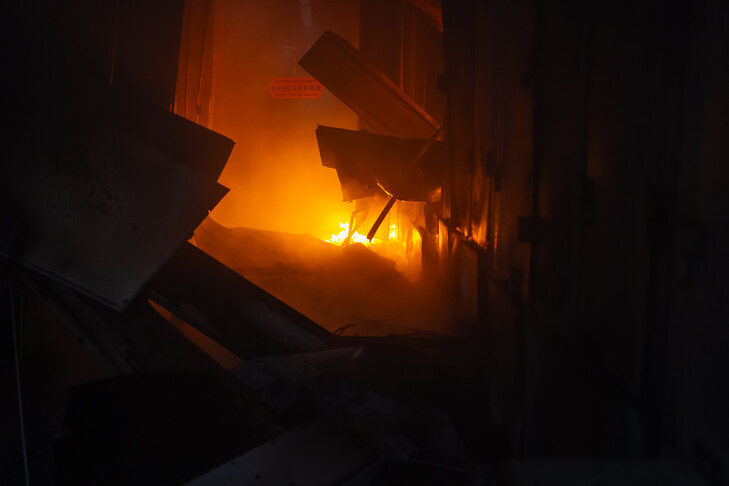
The Ukrainian Foreign Ministry has confirmed that 24 civilians lost their lives and five suffered injuries in recent Russian airstrikes on the settlement of Komyshuvakha in the Zaporizhzhia region. The attacks targeted a school that regularly served as a humanitarian aid distribution point and a shelter where residents had sought refuge. Ukrainian President Volodymyr Zelenskyy has affirmed ongoing rescue operations while Russia has yet to respond to these claims.
The Ukrainian Foreign Ministry announced on November 2 that the death toll from Russian airstrikes on Komyshuvakha, a settlement in the Zaporizhzhia region, has increased to twenty‑four civilians, with an additional five people wounded.
According to the ministry's statement, Russian forces carried out a series of aerial attacks on the area, striking a building that functioned as a school where local residents regularly gathered to receive humanitarian aid. Subsequently, nine additional bombs were dropped on a shelter that had been used by people seeking safety.
"Russia knew that civilians had gathered there to receive humanitarian aid. Yet it attacked both the building and the shelter where people had sought safety," the ministry said in a message posted on the social media platform X.
Capitalized by the statement, the Ukrainian Foreign Ministry called for a stronger international response to the attacks. It urged increased pressure on Moscow and highlighted the continued need for global support to Ukraine in the wake of what it described as deliberate civilian targeting.
President Volodymyr Zelenskyy confirmed that rescue operations were underway and that searches for survivors were in progress. He added that emergency services and military personnel were actively involved in the site investigations.
In a related statement, Zelenskyy extended his condolences to the families of the victims, expressing his deep sorrow over the loss of life and the pain inflicted on the affected communities.
Despite the Ukrainian claims, Russian authorities have not yet made any public comment or provided an official response regarding the allegations of civilian attacks.
The ministry’s declaration raises several questions about the nature of the offensive tactics employed: the precise type of munitions used in the strikes, the decision‑making process that led to targeting civilian infrastructure, and the mechanisms for accountability under international law.
Follow‑up investigations by Ukrainian officials aim to gather more evidence on the incident, including launched through forensic analysis of debris, eyewitness testimonies, and satellite imagery. Authorities also plan to document the extent of the damage to the school and the shelter, with the hope of substantiating the allegations against Russian forces.
From an international perspective, the escalation of attacks on humanitarian facilities carries significant implications. The fact that a building used for aid distribution and a shelter for civilians were hit suggests a violation of the principles of distinction and proportionality that are core to the rules of armed conflict.
In response, Ukrainian representatives have appealed to international bodies, calling upon the United Nations and other global actors to intensify diplomatic pressure on Russia and to consider coordinated action to protect civilians in conflict zones.
As the Ukrainian government gathers additional documentation and seeks corroboration from independent observers, the situation remains fluid. The extent of the damage to the community infrastructure, along with the ongoing search for survivors, is likely to inform future diplomatic negotiations.
At this stage, the international community watches closely as Ukrainian officials continue to release new information. Observation groups and humanitarian agencies are preparing to support relief operations while emphasizing the need for a thorough and transparent investigation.
While Russia has yet to respond, the rising death toll and the confirmation of attacks on the school and shelter underscore the urgent need to prevent further civilian casualties and to hold accountable those responsible for the conduct of hostilities in the Zaporizhzhia region.


