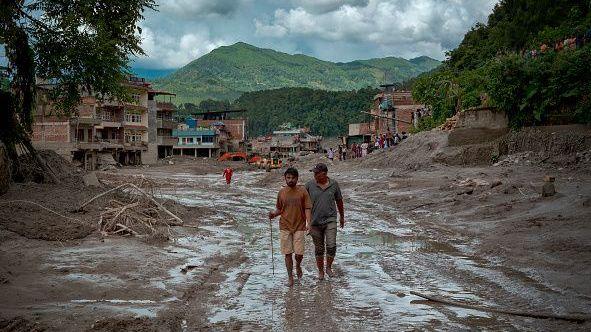
During a speech at the United Nations General Assembly, Nepal’s prime minister Balendra Shah warned that the Himalayan region faces a growing risk of climate‑related disasters. He highlighted the devastating floods that struck Nepal in August and urged neighboring India and China to work together through a new Himalayan Climate Resilience Mechanism.
The proposed mechanism would enable the three countries to share scientific data, coordinate disaster response and develop shared early‑warning systems in a region described as one of the world’s most environmentally fragile and geopolitically sensitive.
Glaciers across the Hindu Kush‑Himalaya have been losing ice at an accelerating pace, with a recent International Centre for Integrated Mountain Development report showing that ice loss has doubled since 2000. The shrinking ice supports more glacial lakes, raising the threat of sudden lake outburst floods that can cross borders and damage lives, infrastructure and livelihoods in Nepal, India and Bhutan.
In addition to floods, the region faces increased landslide hazards linked to heavier rainfall, a trend projected to intensify over the coming decades. The scale of the threat has turned cross‑border collaboration from an ideal into a necessity, but past efforts have stalled because of political tensions and concerns over strategic information.
India and China previously signed a 2009 joint research agreement on Himalayan glaciers but the collaboration has since lapsed, largely because hydrological data sharing agreements expired and geopolitical friction heightened. Analysts say that a pragmatic, low‑risk approach—such as exchanging non‑strategic disaster risk data and jointly identifying high‑risk glacial lakes—could lay the groundwork for deeper cooperation.
For Nepal, the challenge lies in persuading its two powerful neighbours to set aside territorial disputes and commit to joint action on a shared climate threat. While a political breakthrough could open the door, the strategic value of certain information remains a critical barrier. Nonetheless, the call to transform the Himalayas from a frontier of fragmentation into a laboratory of international cooperation has already sparked debate among scientists, policymakers and security experts.