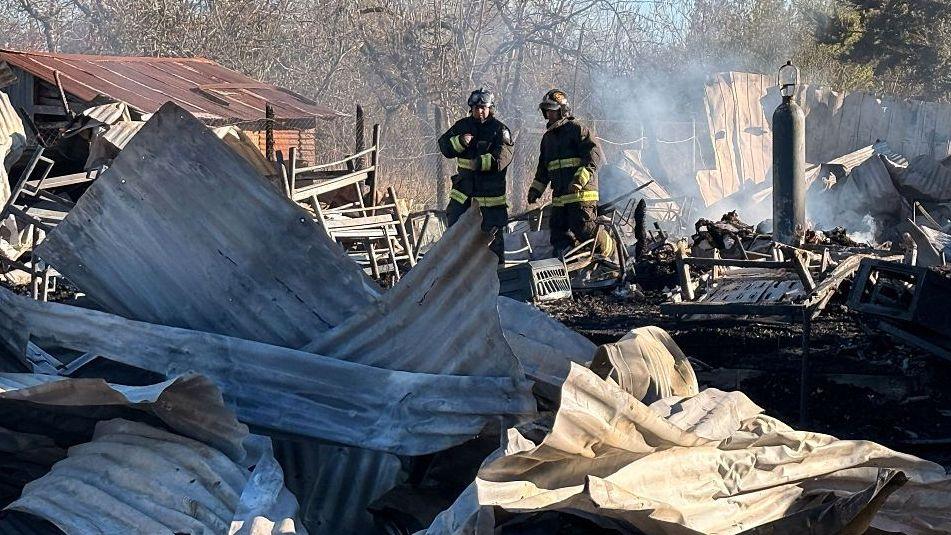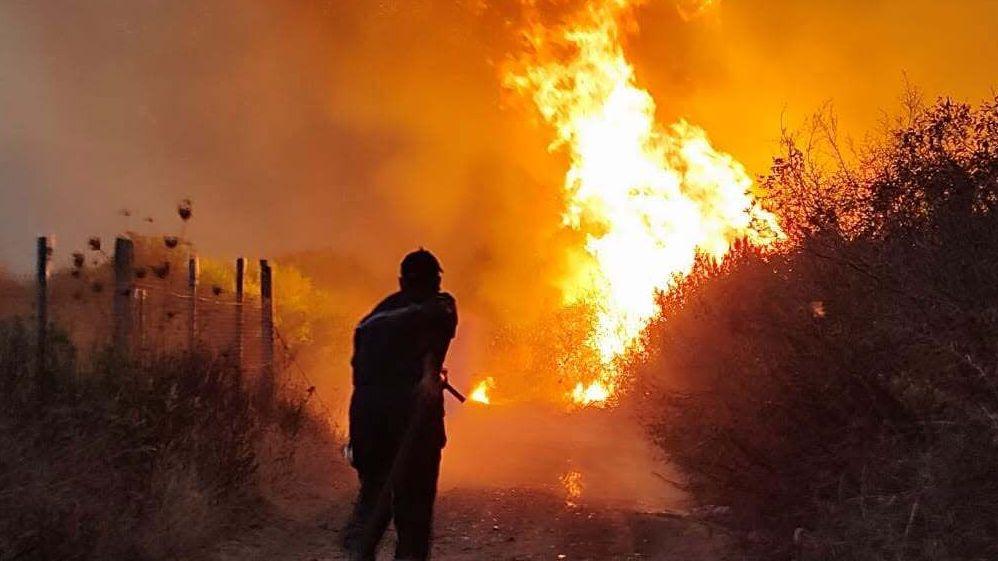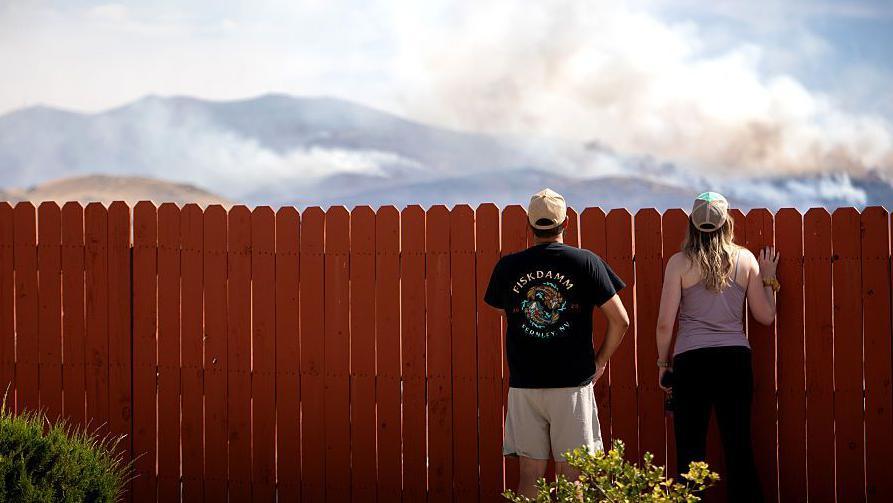
NAHUNTA, Ga. — A catastrophic wildfire in southeast Georgia has prompted additional evacuation orders as the flames continue to threaten homes and communities across Brantley County. The blaze, which ignited earlier this week, has devastated almost 90 homes, transforming neighborhoods into scorched remnants surrounded by charred trees and abandoned vehicles.
The Georgia Forestry Commission reported that the fire has expanded to more than 8 square miles (20 square kilometers) and is currently just 15% contained. Local authorities warned residents to evacuate immediately if ordered, emphasizing swift action can be crucial.
If you receive a mandatory evacuation notice, we need you to evacuate just as quickly as possible, said Joey Cason, county manager for Brantley County. That containment can move from 15% to 0% in a matter of minutes with the wind.
Firefighters are facing challenges, not only in Georgia but also in neighboring Florida, where over 120 wildfires are raging, sending smoke and poor air quality alerts to numerous areas. Scientists have pointed to factors such as climate change, ongoing drought, and residual effects from previous natural disasters as contributing to the heightened wildfire risk in the Eastern U.S.
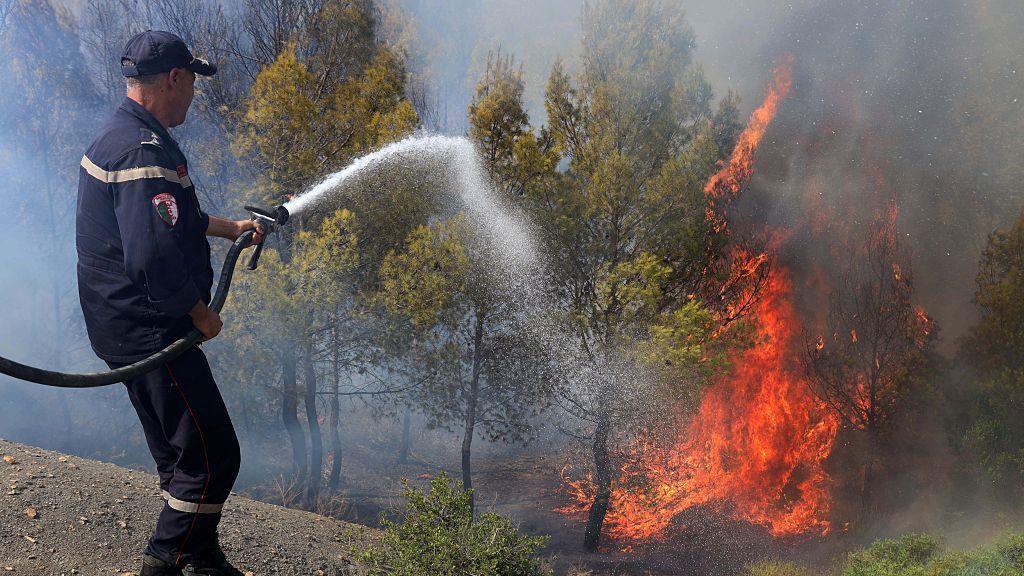
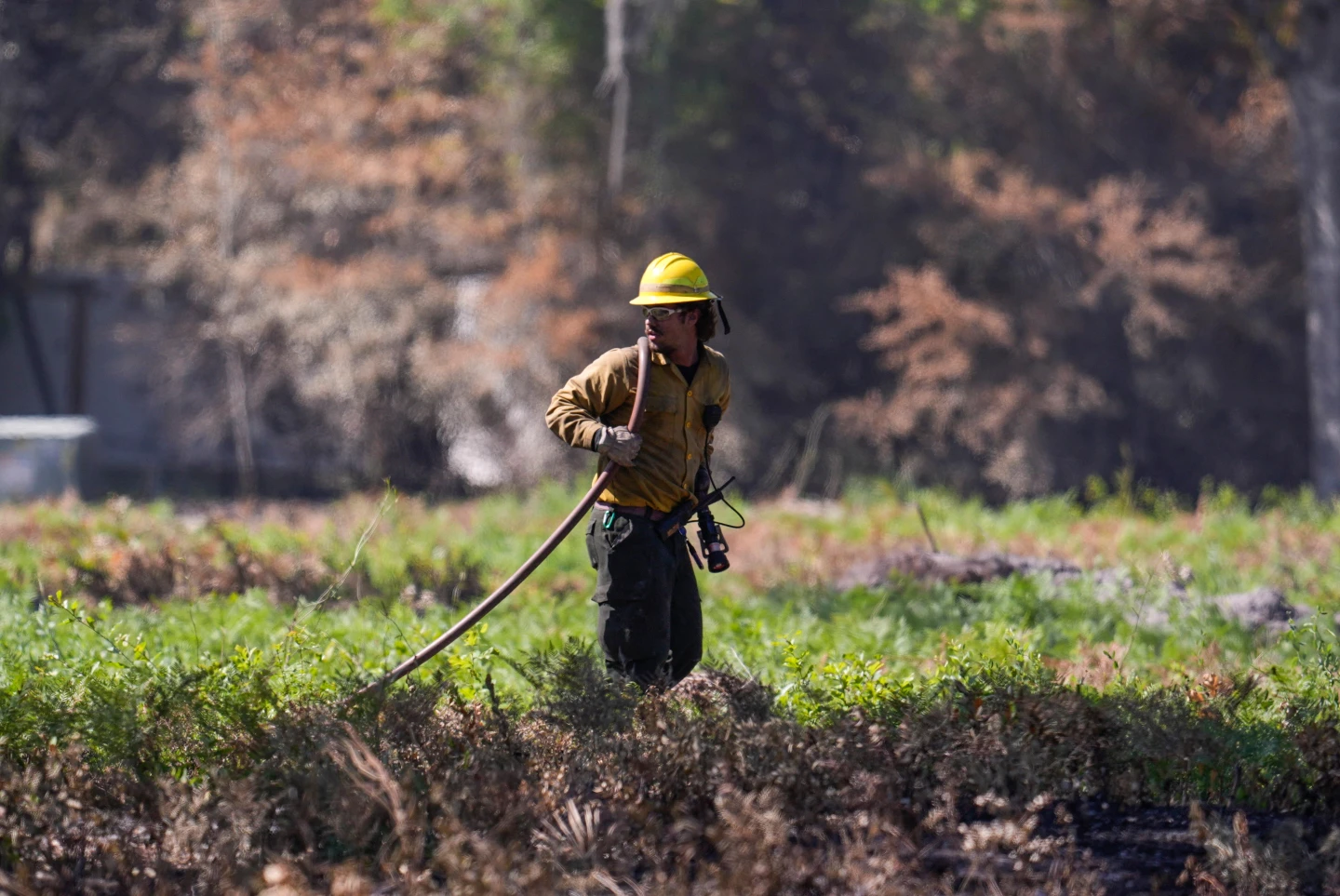
Local estimates put the number of those evacuated around 200, leaving many residents anxious about their homes and pets left behind. Fire crews, aided by heavy machinery, are attempting to establish firebreaks while also striving to protect any remaining structures by applying water and clearing dry vegetation.
The situation remains precarious as weather forecasts predict potential thunderstorms with limited rain, a development officials hope will provide some relief but could also introduce new fire hazards from lightning. Experts state that substantial rainfall is necessary—several inches—to thoroughly extinguish the ongoing fires.
As the region grapples with these wildfires, the impact on the community and environment continues to escalate, with ongoing efforts to mitigate damages and ensure resident safety.
The Georgia Forestry Commission reported that the fire has expanded to more than 8 square miles (20 square kilometers) and is currently just 15% contained. Local authorities warned residents to evacuate immediately if ordered, emphasizing swift action can be crucial.
If you receive a mandatory evacuation notice, we need you to evacuate just as quickly as possible, said Joey Cason, county manager for Brantley County. That containment can move from 15% to 0% in a matter of minutes with the wind.
Firefighters are facing challenges, not only in Georgia but also in neighboring Florida, where over 120 wildfires are raging, sending smoke and poor air quality alerts to numerous areas. Scientists have pointed to factors such as climate change, ongoing drought, and residual effects from previous natural disasters as contributing to the heightened wildfire risk in the Eastern U.S.
Local estimates put the number of those evacuated around 200, leaving many residents anxious about their homes and pets left behind. Fire crews, aided by heavy machinery, are attempting to establish firebreaks while also striving to protect any remaining structures by applying water and clearing dry vegetation.
The situation remains precarious as weather forecasts predict potential thunderstorms with limited rain, a development officials hope will provide some relief but could also introduce new fire hazards from lightning. Experts state that substantial rainfall is necessary—several inches—to thoroughly extinguish the ongoing fires.
As the region grapples with these wildfires, the impact on the community and environment continues to escalate, with ongoing efforts to mitigate damages and ensure resident safety.