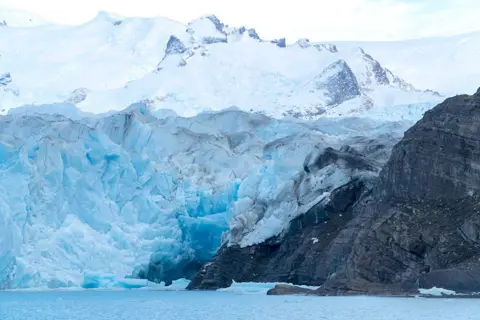
Without water, there would be no wine, declares Virginia de Valle, standing in her family's vineyard in Mendoza, as concerns mount over the future of Argentina's glaciers. After MPs passed legislation relaxing the protection of these vital ice reserves, local winemakers fear for their water supply essential for irrigation.
The Andes, with their seasonal snow and glaciers, are the backbone of water sources for Mendoza, often referred to as the 'daughter of water.' Glacial melt has historically buffered the region against drought, a situation increasingly common in a climate-changed landscape.
The glaciers, numbering nearly 17,000 in Argentina, serve not only Mendoza but also provide essential water across multiple river basins feeding urban areas and agricultural lands. Recent legislative reforms have sparked protests across the nation, with the mantra "Los glaciares no se tocan" (hands off the glaciers) resonating among the populace.
These reforms, which shift the responsibility of glacier protection from federal to provincial governments, raise questions about the future of water resources as local authorities now decide the 'strategic importance' of each glacier. Critics argue that mining interests might exploit these loopholes to access glaciers previously safeguarded, jeopardizing water sources for millions.
Supporters of the legislation argue that removing what they perceive as regulatory barriers might lead to significant economic advancement, particularly in mining—a sector critical for Argentina's economy, especially in copper and lithium production. However, the balance between economic growth and environmental health is precarious, prompting fervent discussions.
As the debate evolves, voices like de Valle's stress the threat to not only agriculture but the very fabric of life that depends on these precious water sources. The battle over Argentina's glaciers is unfolding at a critical juncture, one that reflects a broader challenge facing many nations grappling with climate realities and resource management.
The Andes, with their seasonal snow and glaciers, are the backbone of water sources for Mendoza, often referred to as the 'daughter of water.' Glacial melt has historically buffered the region against drought, a situation increasingly common in a climate-changed landscape.
The glaciers, numbering nearly 17,000 in Argentina, serve not only Mendoza but also provide essential water across multiple river basins feeding urban areas and agricultural lands. Recent legislative reforms have sparked protests across the nation, with the mantra "Los glaciares no se tocan" (hands off the glaciers) resonating among the populace.
These reforms, which shift the responsibility of glacier protection from federal to provincial governments, raise questions about the future of water resources as local authorities now decide the 'strategic importance' of each glacier. Critics argue that mining interests might exploit these loopholes to access glaciers previously safeguarded, jeopardizing water sources for millions.
Supporters of the legislation argue that removing what they perceive as regulatory barriers might lead to significant economic advancement, particularly in mining—a sector critical for Argentina's economy, especially in copper and lithium production. However, the balance between economic growth and environmental health is precarious, prompting fervent discussions.
As the debate evolves, voices like de Valle's stress the threat to not only agriculture but the very fabric of life that depends on these precious water sources. The battle over Argentina's glaciers is unfolding at a critical juncture, one that reflects a broader challenge facing many nations grappling with climate realities and resource management.